Manage Employee Training with Greater Visibility and Control
Plan, assign, track, and evaluate employee training from one platform.
Build a More Structured Approach to Employee Training
Managing employee training involves more than scheduling courses. HR and training teams need to identify learning requirements, assign the right programs, monitor participation, manage classroom and online sessions, evaluate outcomes, and maintain training records.
Digital HRMS brings these activities together through an integrated employee training management software solution. It supports online learning as well as classroom training, helping organizations manage employee development requirements across teams and training cycles.
With centralized training information, configurable workflows, training reports, TNI management, goal setting, and calendar-based visibility, the LMS module gives HR and training teams greater control over the complete training lifecycle.
Common Challenges in Managing Employee Training
As organizations invest more in upskilling and reskilling, training teams need to manage multiple learning formats, employee requirements, nominations, schedules, evaluations, and reporting requirements. Without a structured system, these activities can become difficult to coordinate.
Scattered Training Information
Training schedules, employee nominations, completion information, and training records may be maintained across different systems or spreadsheets, making it difficult to get a consolidated view.
Difficulty Identifying Training Needs
Understanding which employees require specific training and connecting those requirements with their roles, assessments, and development goals can be challenging without a structured Training Needs Identification process.
Managing Multiple Training Formats
Organizations may conduct classroom, online, quiz-based, and other forms of training. Managing different training formats and their associated records requires a centralized approach.
Limited Visibility into Training Progress
HR and managers need to know which trainings are assigned, enrolled, pending, completed, or overdue. Limited visibility can make it difficult to follow up with employees and teams.
Complex Training Reporting
Training teams may need reports covering attendance, training requirements, trainer information, evaluations, documents, assessments, training hours, and other parameters. Preparing these reports manually can consume significant time.
Coordinating Training Schedules
Training schedules need to be aligned with employee availability, trainers, training dates, and organizational requirements. Without a shared calendar, keeping track of scheduled learning activities becomes difficult.
A Centralized Approach to Managing Employee Training
Digital HRMS provides an integrated LMS environment where employees, managers, and training administrators can manage their respective training activities based on their roles and responsibilities.
Manage Training from One Platform
Bring training allocation, employee nominations, training requests, external training, TNI, reporting, and scheduling together within a centralized training environment.
Support Online and Classroom Learning
The platform supports multiple training channels, including online training, classroom training, and on-the-job training, allowing organizations to manage different learning approaches.
Identify and Plan Training Needs
Training administrators can create TNI requirements, activate them for employees and managers, and define training goals with specific start and end dates.
Give Employees Personalized Training Visibility
Employees can access their assigned trainings, suggested trainings, available learning programs, training goals, and quarterly training information from their respective training views.
Track Training Activities and Outcomes
Training teams can monitor training participation, requirements, evaluations, assignments, assessments, trainer information, and other training-related parameters through dedicated reports.
Manage Training Across Different Roles
Employees, managers, and Training Admin users receive access to relevant training functions, allowing organizations to maintain role-based control over training activities.
Key Features of Trainings Module
Digital HRMS combines the capabilities of an online training software, corporate training LMS, and broader employee development platform to help organizations plan, deliver, monitor, and evaluate training activities.
Explore the Training Management Workspace
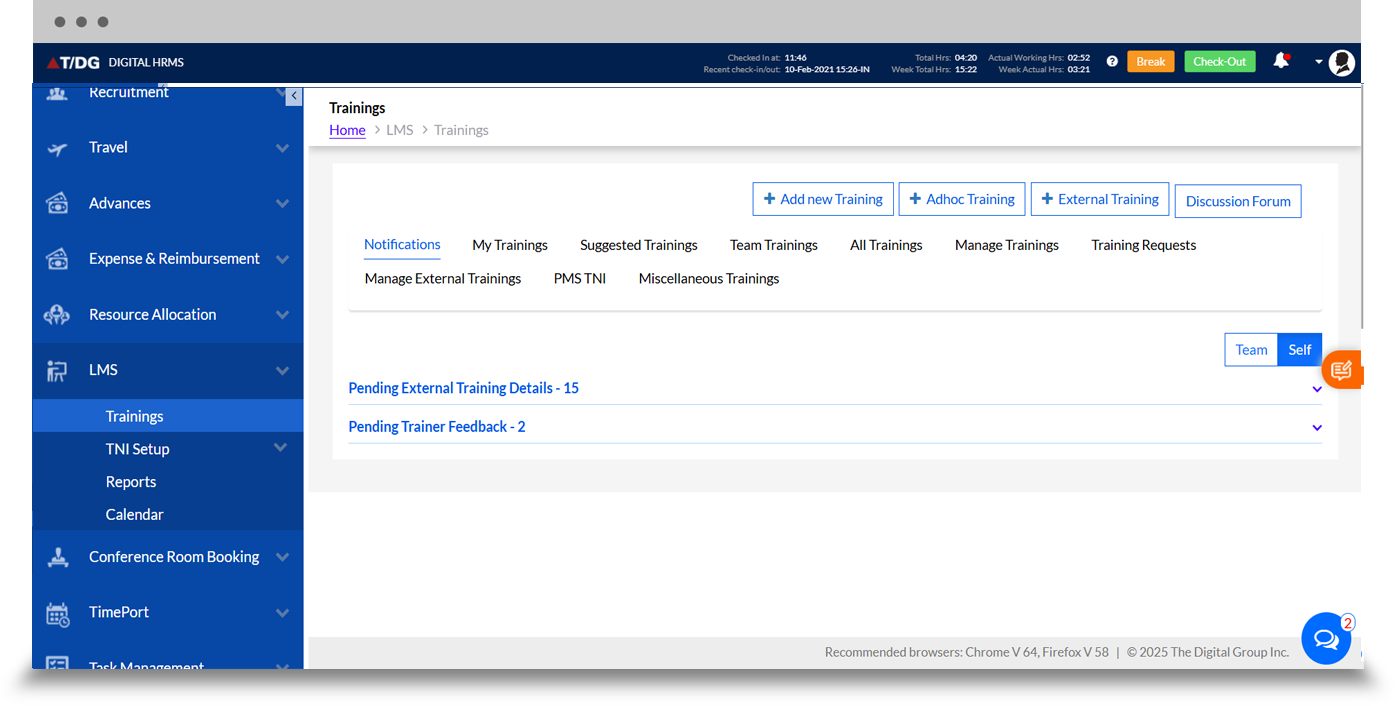
The Training Management module provides separate workspaces for employees, managers, and Training Admin users. The interface organizes training activities into Trainings, TNI Setup, Reports, and Calendar, with dedicated tabs and functions under each area.
a. Notifications
The Notifications area provides users with visibility into training-related updates and actions. Training notifications can also be accessed through the system's notification/Bell icon, helping users stay informed about relevant training activities.
b. My Trainings
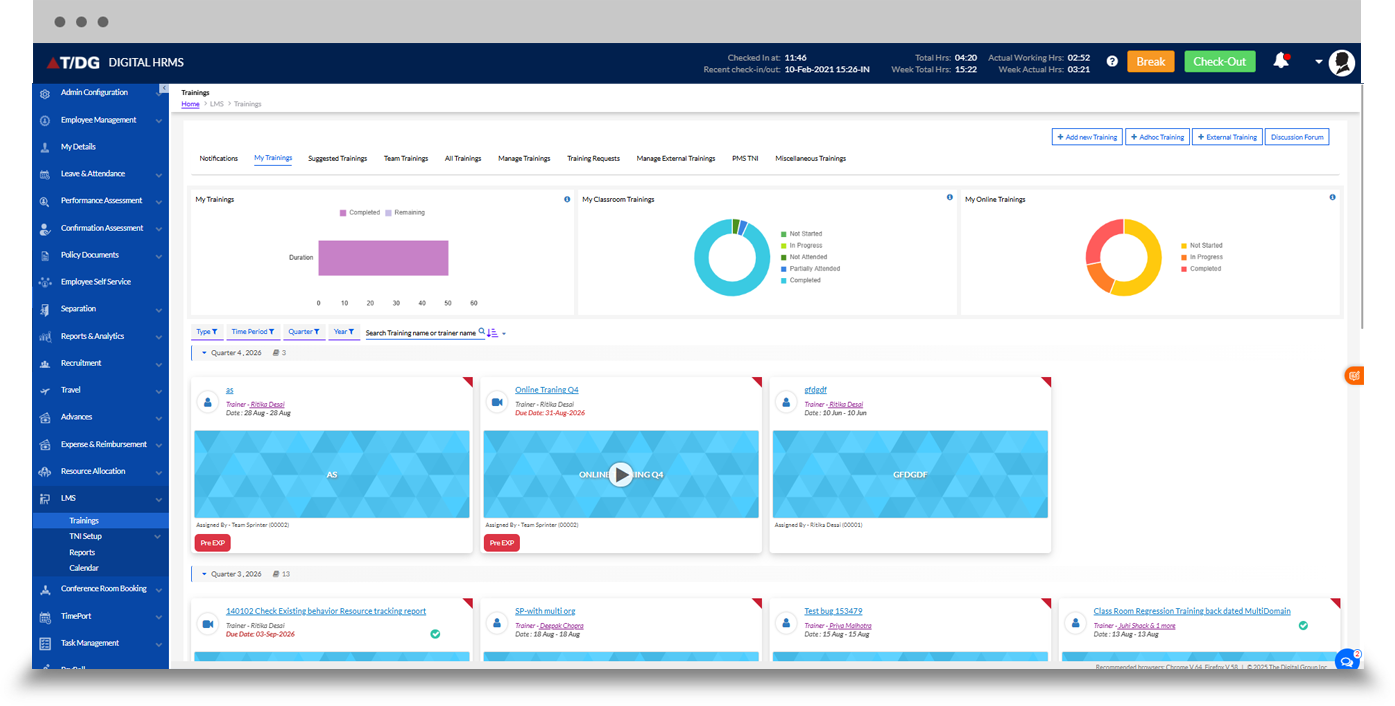
The My Trainings area gives employees a consolidated view of their personal training activities.
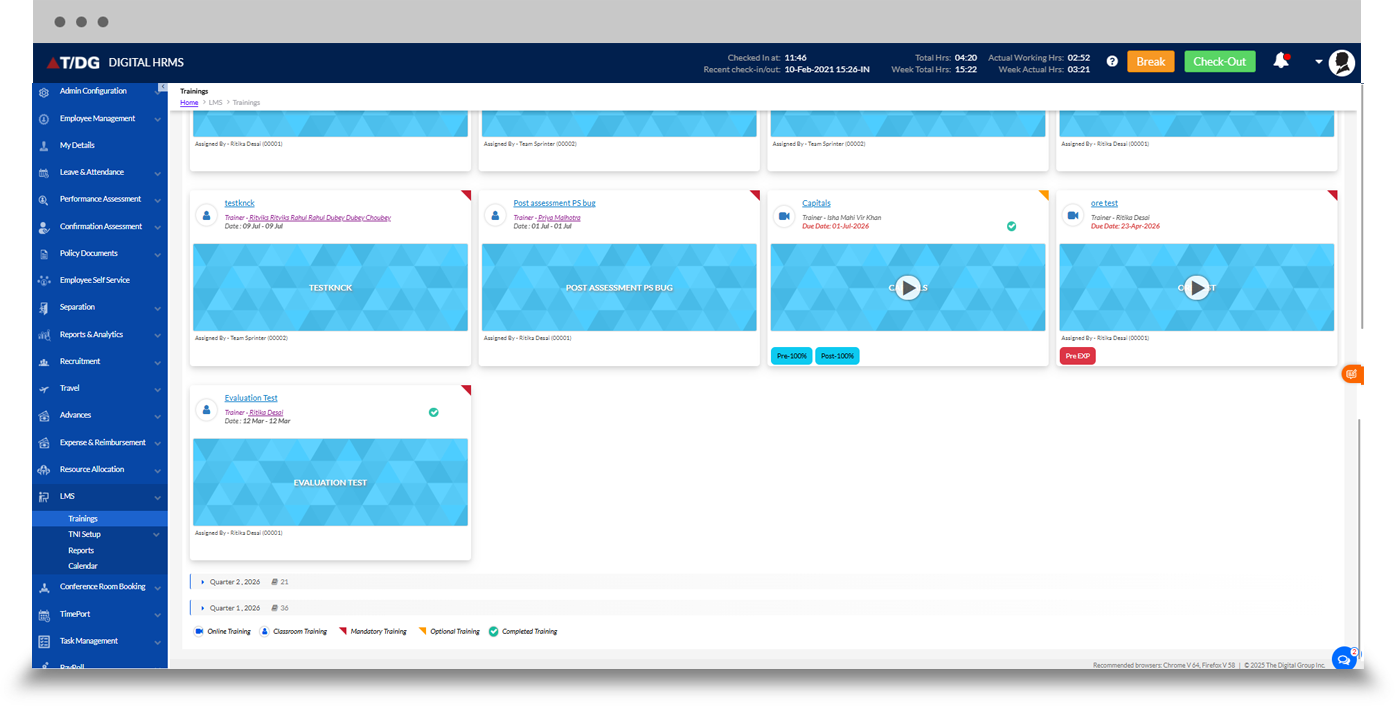
The interface provides visibility into My Classroom Trainings and My Online Trainings, allowing users to distinguish between different learning formats. It also presents training information graphically and shows the employee's allocated trainings across different quarters.
Users can search for training by training name or trainer name and filter information based on training type, quarter, and year. It also provides visibility into training status, including areas such as completed, remaining, in-progress, not attended, and other applicable training states.
The interface additionally provides access to training-related activities such as Ad-hoc Training, External Training, Miscellaneous Trainings, and Discussion Forum, giving employees a broader view of their learning activities.
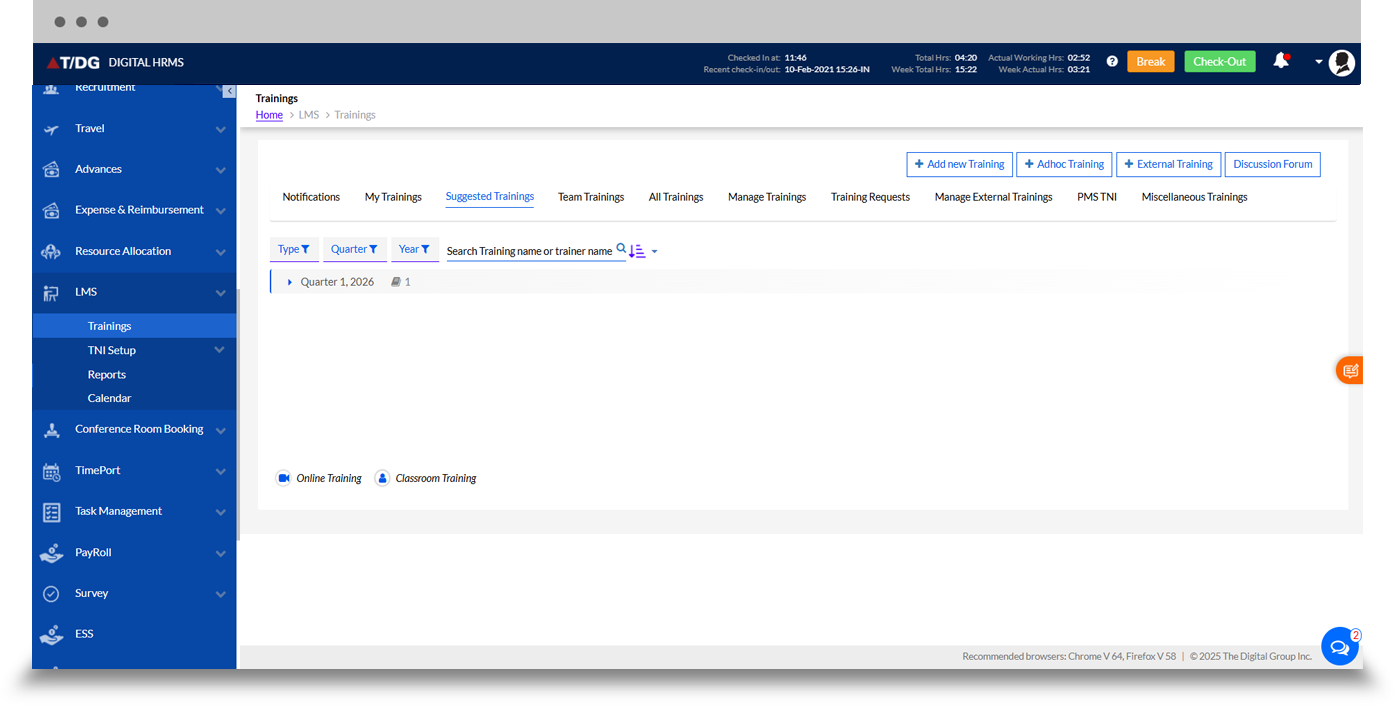
c. Suggested Trainings
The Suggested Trainings area presents training programs recommended for individual employees.
Training suggestions can be made by managers or HR based on factors such as employee assessment and progress. This allows learning recommendations to be connected with an employee's development requirements rather than relying only on employee-initiated training requests.
d. Team Trainings
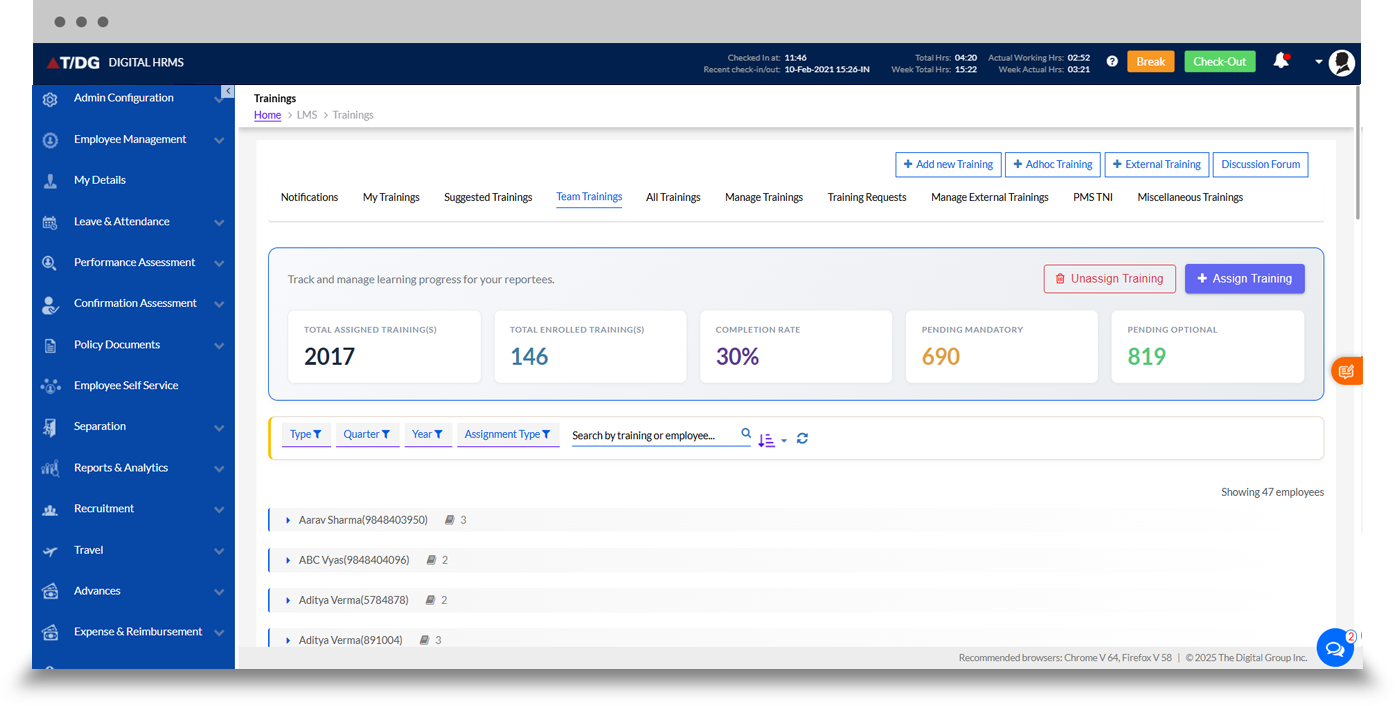
The Team Trainings area is available to L1 Managers, L2 Managers, and Training Admin users.
Managers can view the training nominations submitted for employees within their teams. By selecting an employee, authorized users can view the training programs assigned to that individual.
This provides managers with visibility into team-level training participation and helps them monitor whether employees are being nominated for relevant learning programs.
e. All Trainings
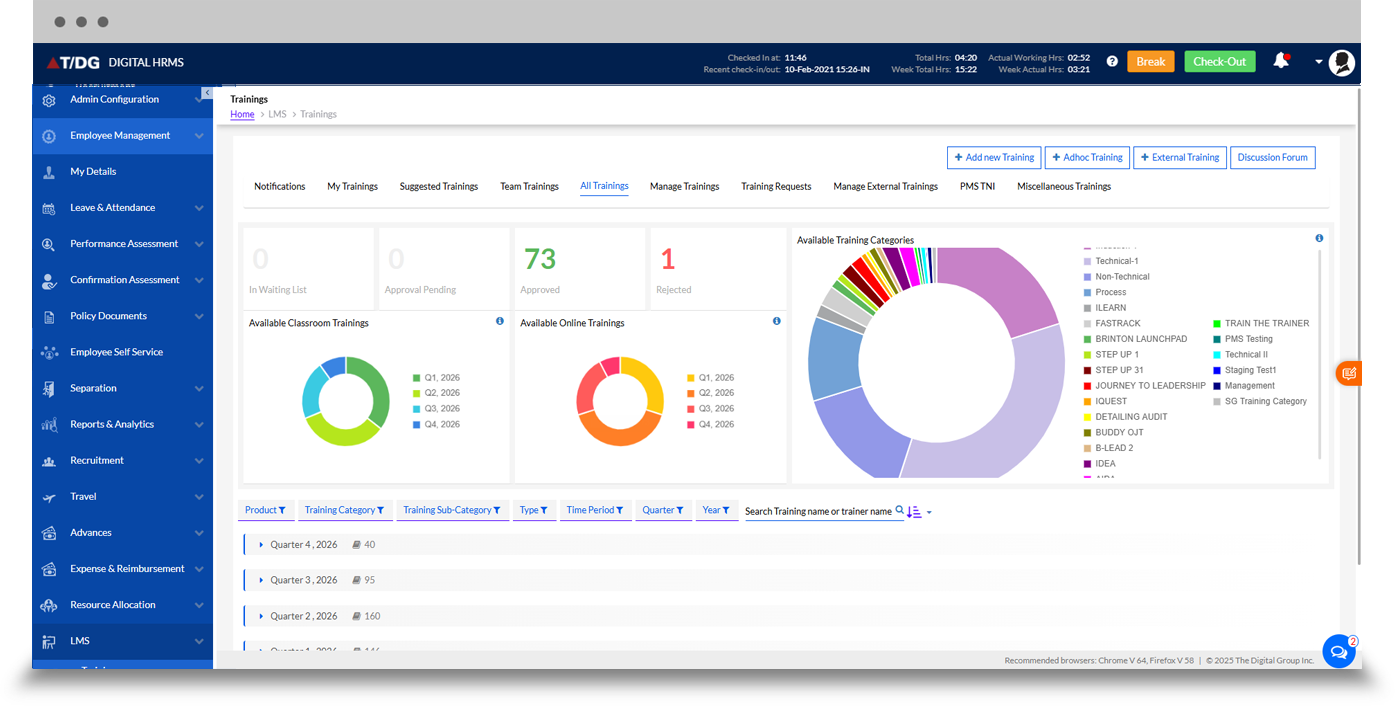
The All Trainings area provides a consolidated view of employee training programs.
It allows users to work with training records using filters such as training type, quarter, and year, along with search by training or trainer name. It also provides access to training actions such as adding new training, creating ad-hoc training, adding external training, and accessing the discussion forum.
The training listing provides information such as Training ID, Title, Type, Skill Level, Training Category, Trainer, Quarter, Year, and Organization, giving Training Admin users a detailed view of available training records.
f. Manage Trainings
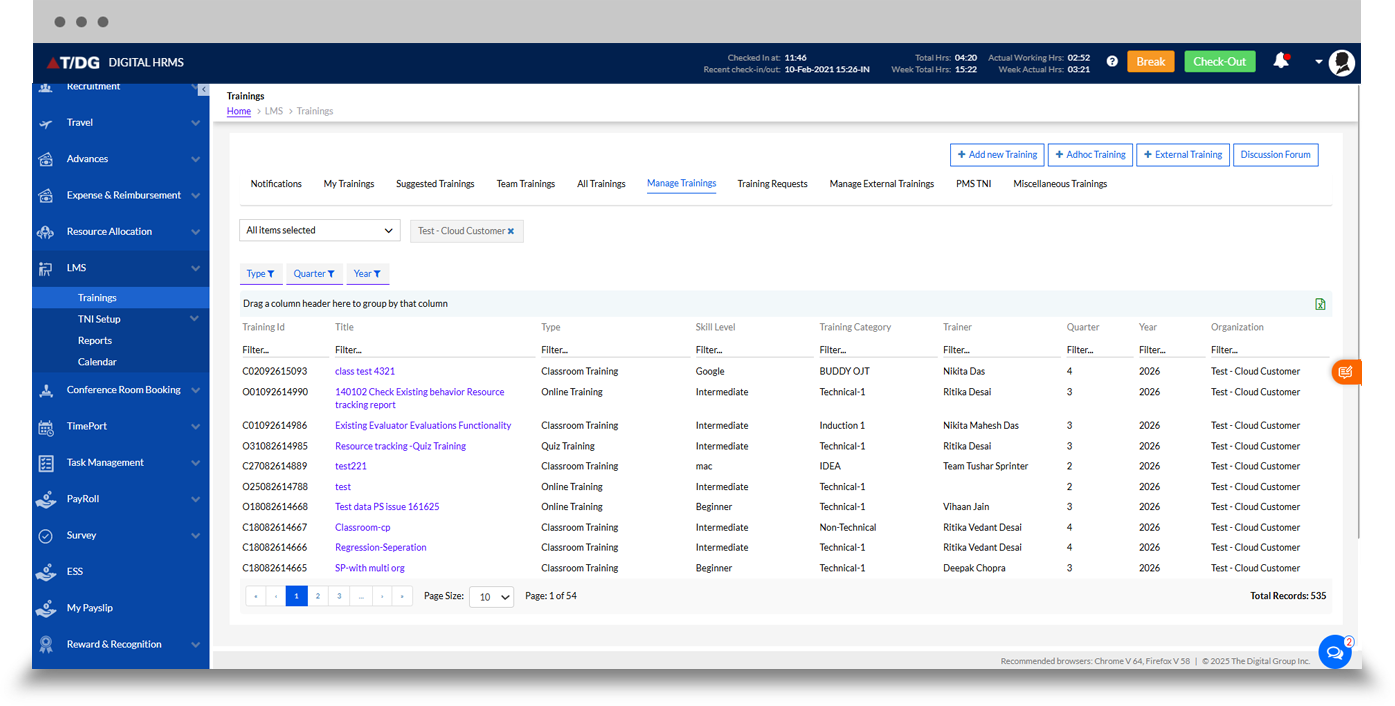
The Manage Trainings area is designed for Training Admin users who need to maintain scheduled training programs.
The interface provides a consolidated list of trainings along with information such as training name, dates, trainer, training type, skill level, category, business unit, requested/approved information, and organization. Training Admin users can review existing training records and manage the details as required.
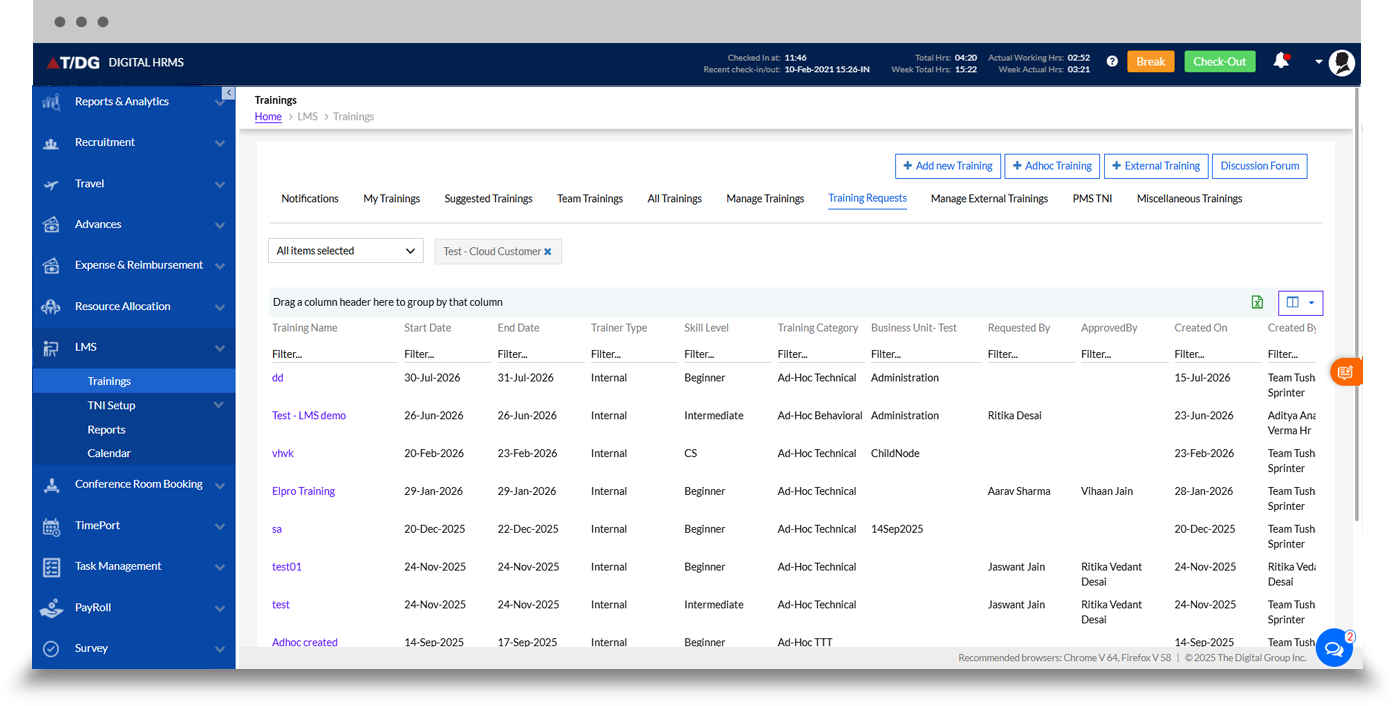
g. Training Requests
The Training Requests area allows Training Admin users to review training requirements raised by managers.
This gives the Training team visibility into the learning requirements identified for different teams and helps them take appropriate action based on the requests raised by managers.
h. Manage External Trainings
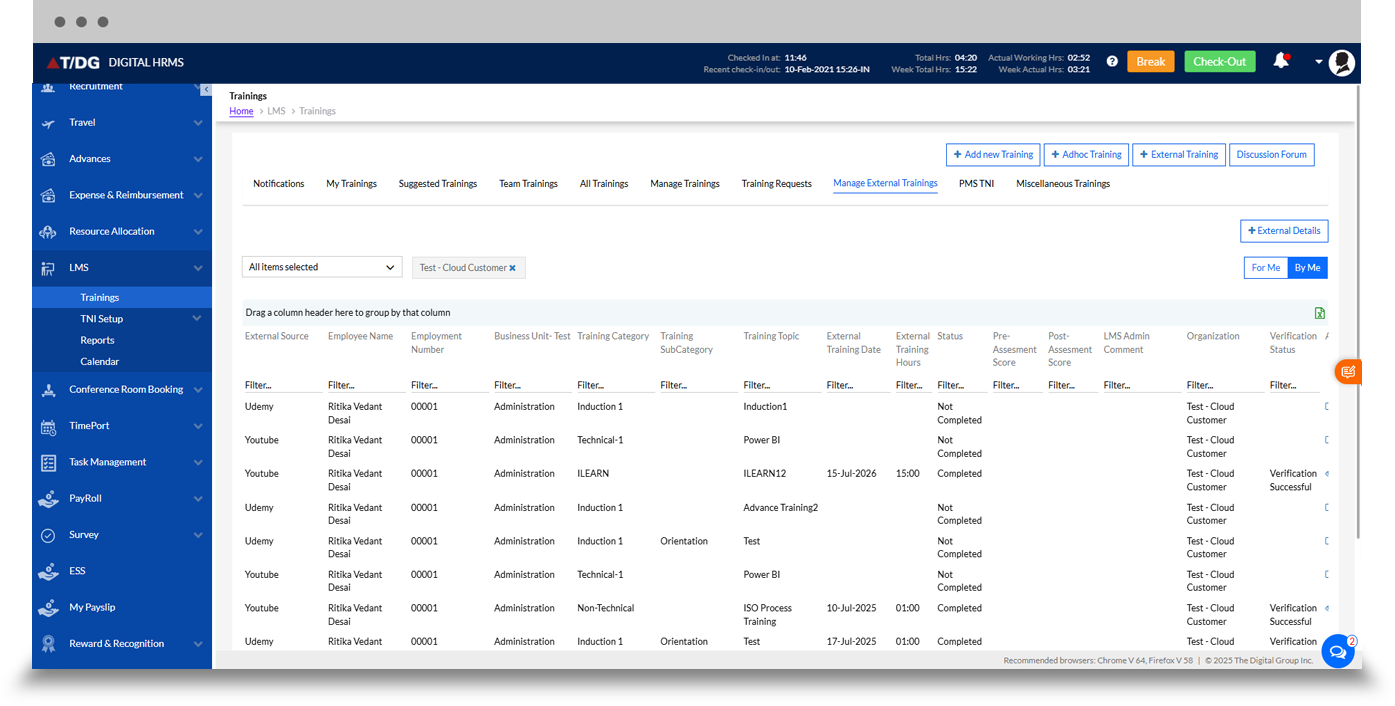
The Manage External Trainings area allows organizations to record and manage employee training programs conducted through external sources.
The interface provides fields for information such as training category, sub-category, training topic, training source, dates, duration, employees, business units, and employee-level training details. It also provides visibility into external training records and their status.
It supports two views - By Me and For Me - allowing users to distinguish between external training activities they have created and those created for them.
i. PMS TNI
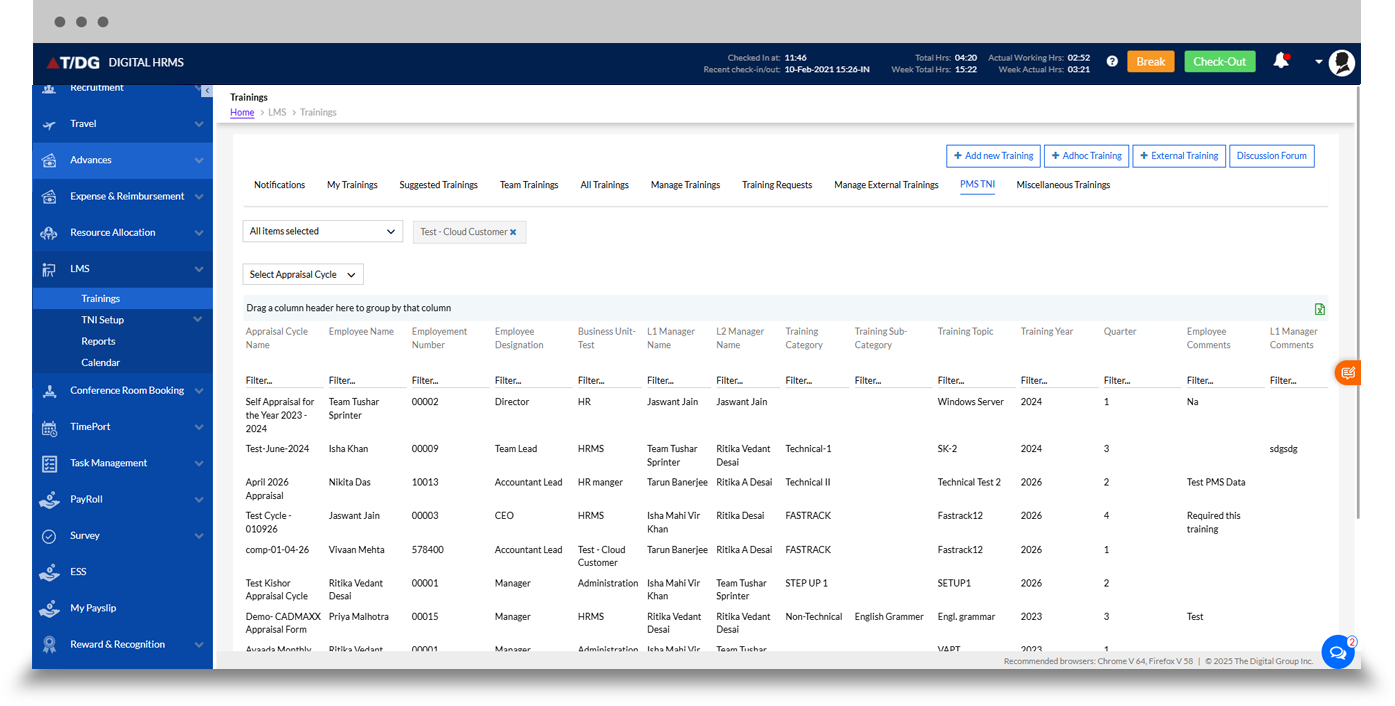
The PMS TNI area connects training requirements with performance management information.
The interface provides employee-related information such as appraisal cycle, employee details, business unit, managers, training category, sub-category, training topic, training year and quarter, and associated comments. This helps training teams review training requirements identified through performance-related processes.
j. Miscellaneous Trainings
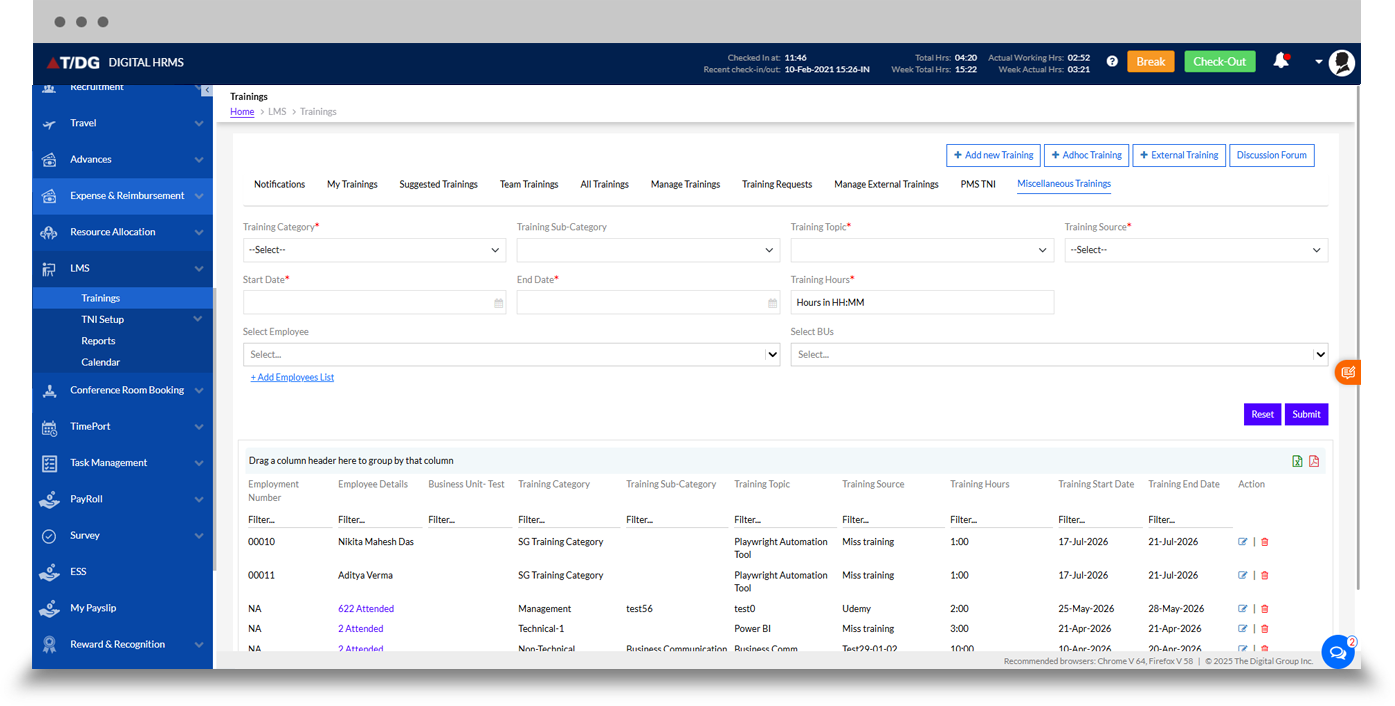
The Miscellaneous Trainings area provides a way to manage additional employee training activities that may not fit into the standard training categories.
This helps maintain a more complete training record by allowing additional learning activities to be managed within the same training environment.
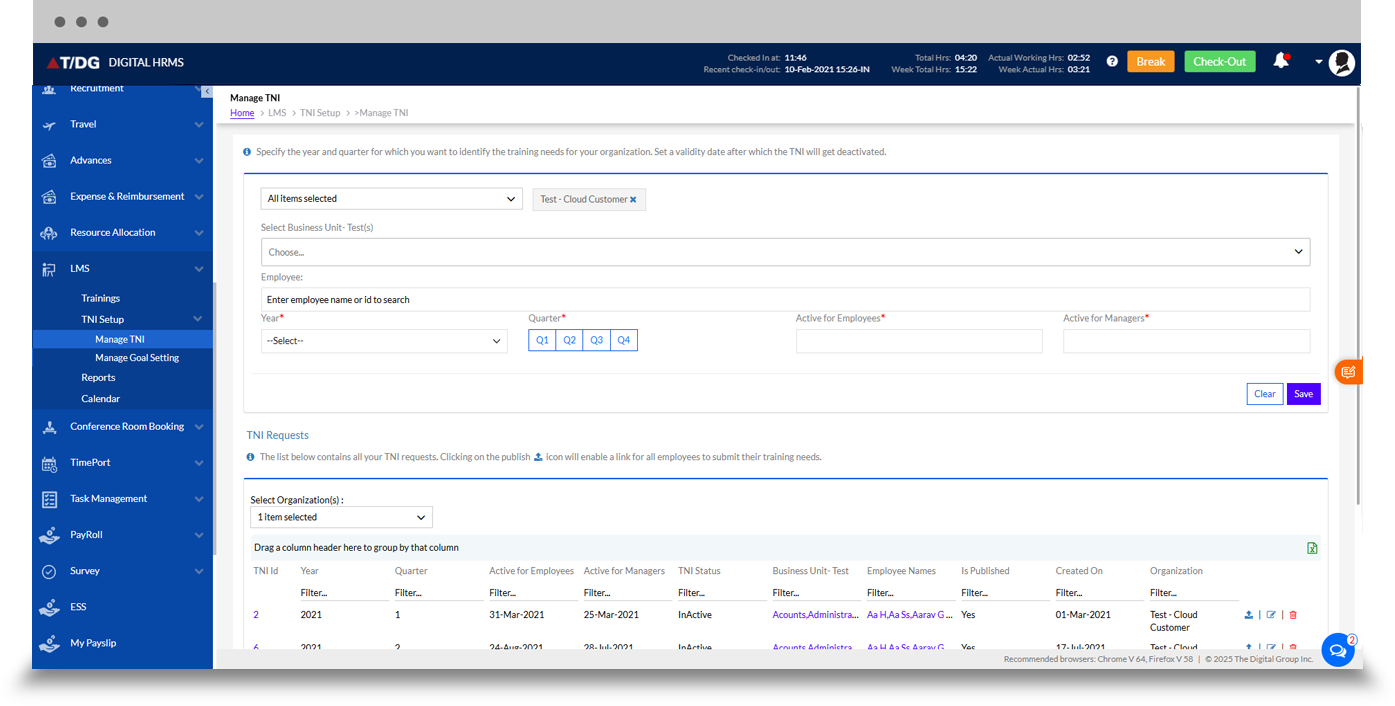
a. Manage TNI
Training Needs Identification (TNI) helps the Training Admin identify and organize the training requirements of employees.
The Manage TNI dashboard allows the administrator to define the year and quarter for which training needs are being identified and set a validity date after which the TNI becomes inactive.
The administrator can select the relevant Business Unit, search for employees, select the year and quarter, and define whether the TNI is active for employees and managers.
It also maintains a list of TNI requests with information such as TNI ID, year, quarter, employee validity date, manager validity date, TNI status, employee names, publication status, creation date, and organization. The Training Admin can publish a TNI so that employees can submit their training needs.
b. Manage Goal Setting
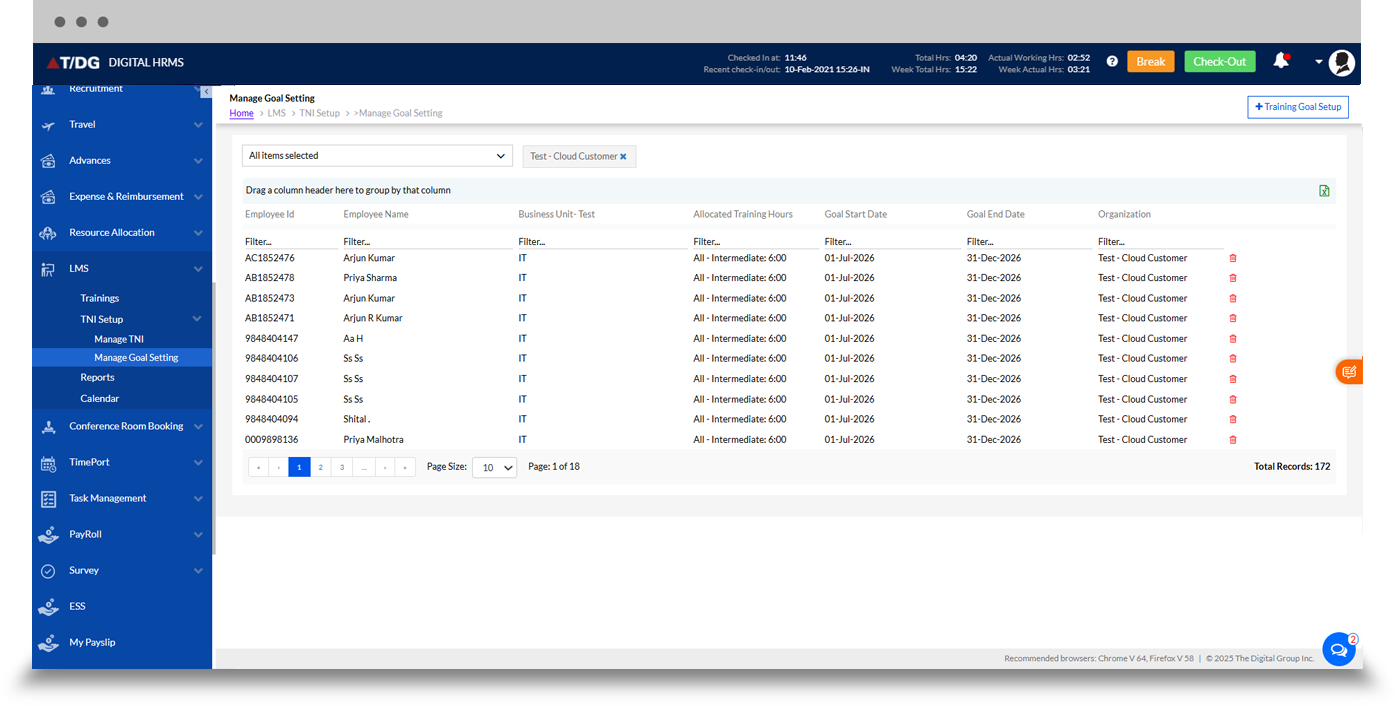
The Manage Goal Setting area allows Training Admin users to establish training goals for employees.
It displays information such as Employee ID, Employee Name, Business Unit, Allocated Training Hours, Goal, Start Date, End Date, and Organization.
This allows training teams to define the expected training allocation for employees and establish a clear period for achieving the assigned training goal.
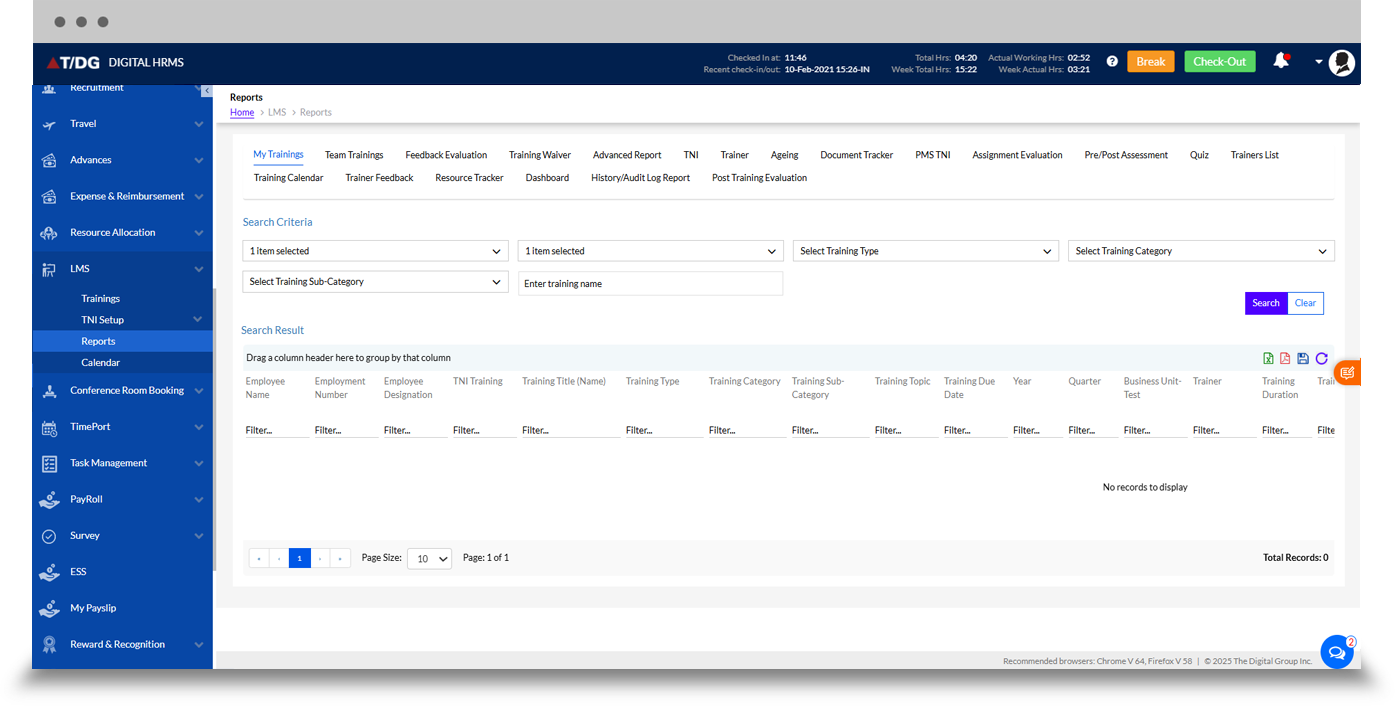
The Reports section provides a comprehensive reporting environment for analyzing employee training activities, participation, requirements, evaluations, assessments, trainers, training hours, documents, and outcomes.
The interface contains multiple specialized reports, allowing the Training team to apply search criteria and review training information in structured tables.
a. My Trainings
Provides detailed reporting on an employee's training activities, including training information, dates, category, trainer, duration, venue, participation, and other relevant training details.
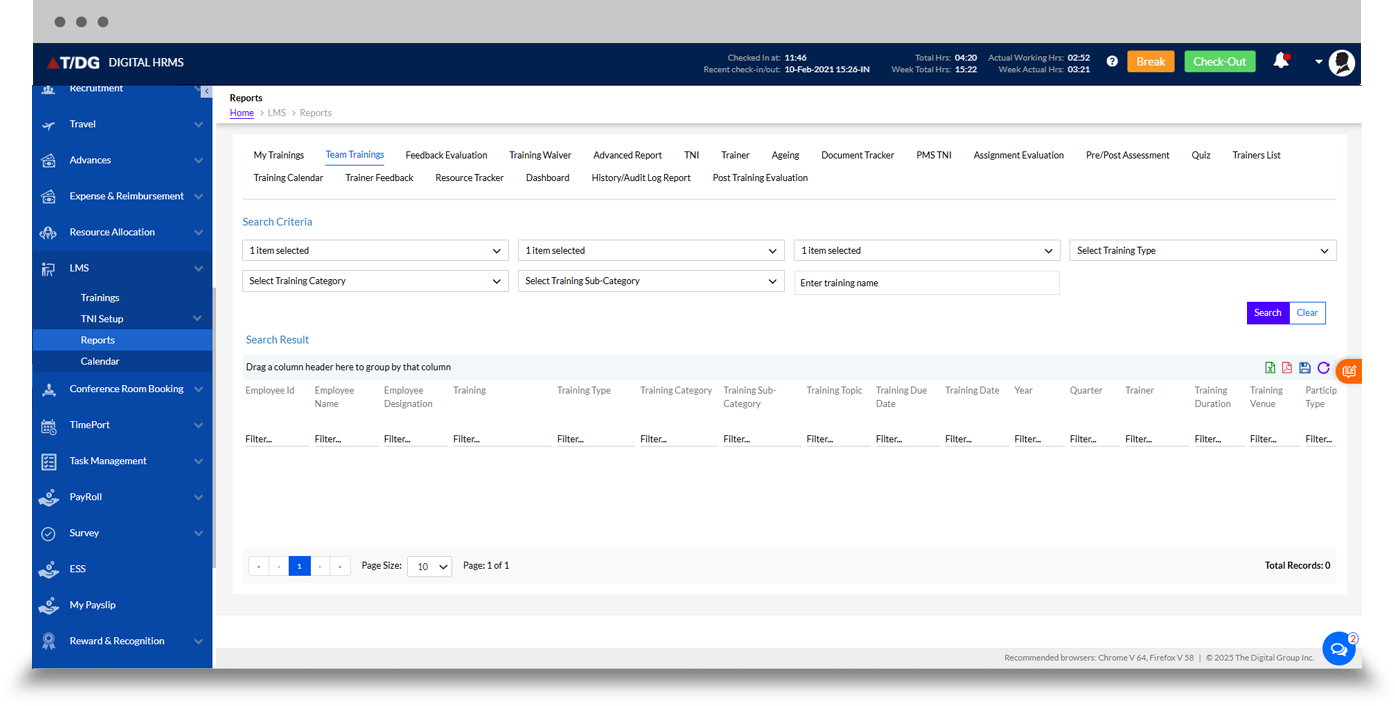
b. Team Trainings
Provides managers and authorized users with training information for their teams, allowing them to review employee-level training participation and related details.
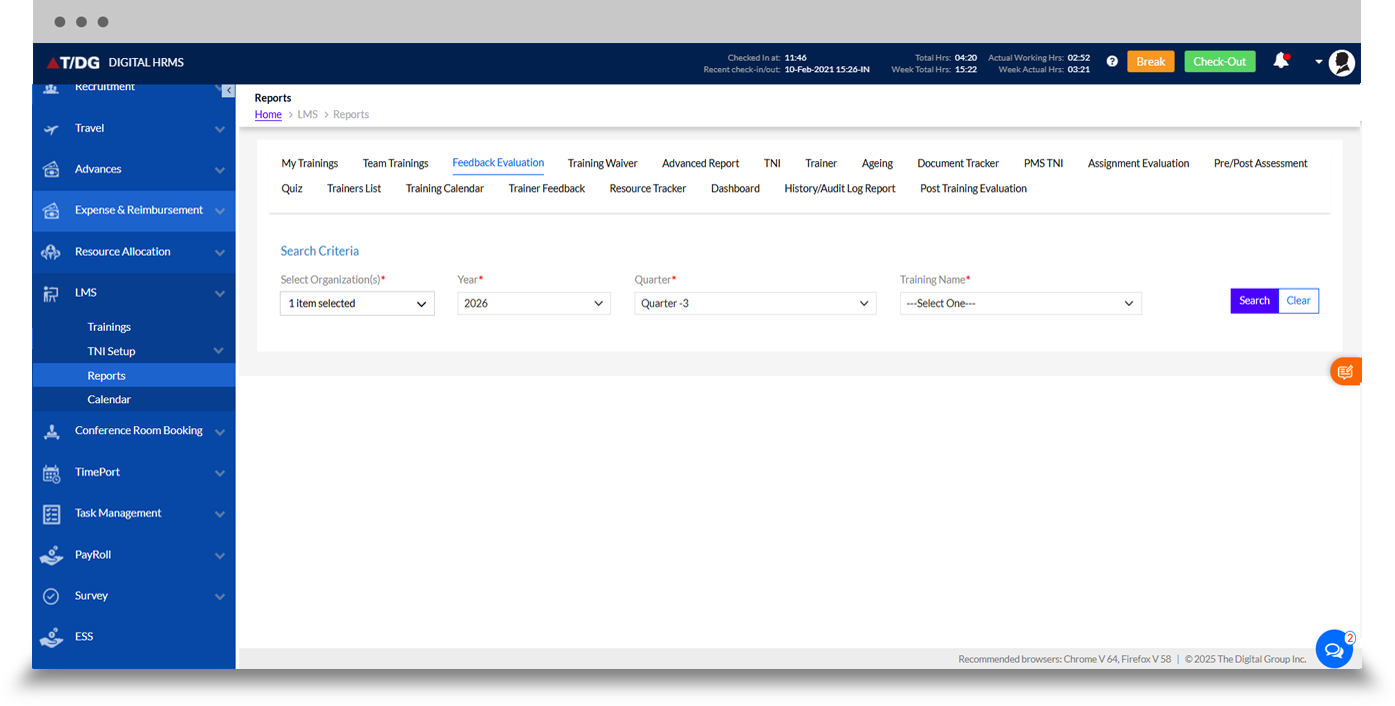
c. Feedback Evaluation
Helps training teams review employee feedback and evaluate training-related responses using relevant search criteria.
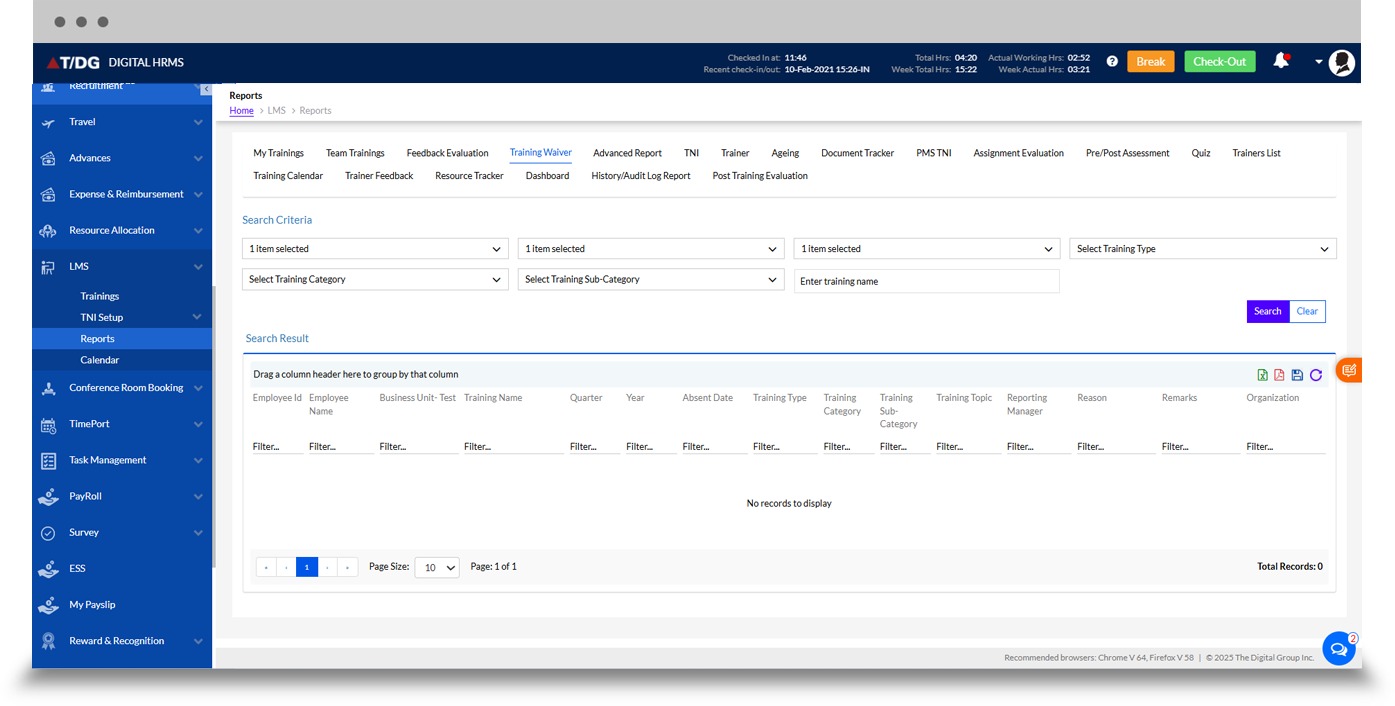
d. Training Waiver
Provides a dedicated report for reviewing training waiver-related information and identifying employees or training activities associated with waivers.
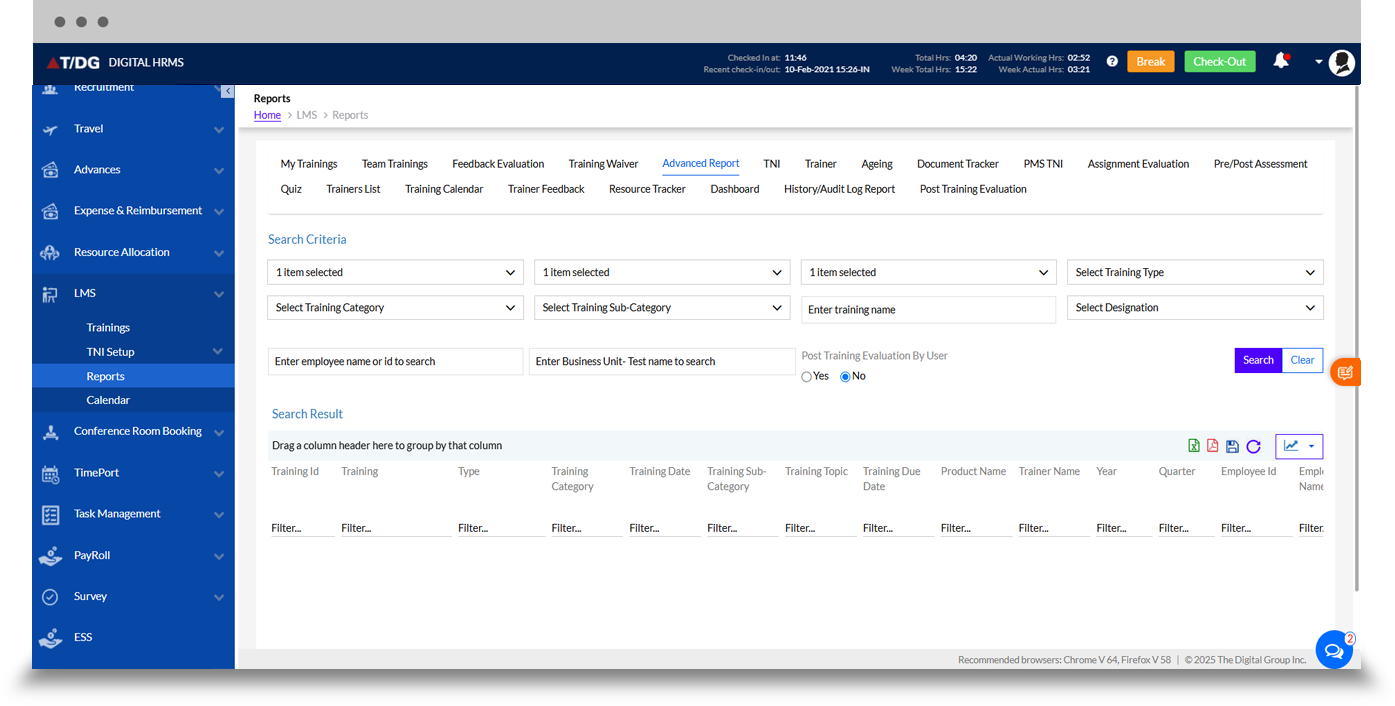
e. Advanced Report
Provides flexible search and reporting capabilities using criteria such as training type, category, sub-category, training name, employee, designation, business unit, and other parameters.
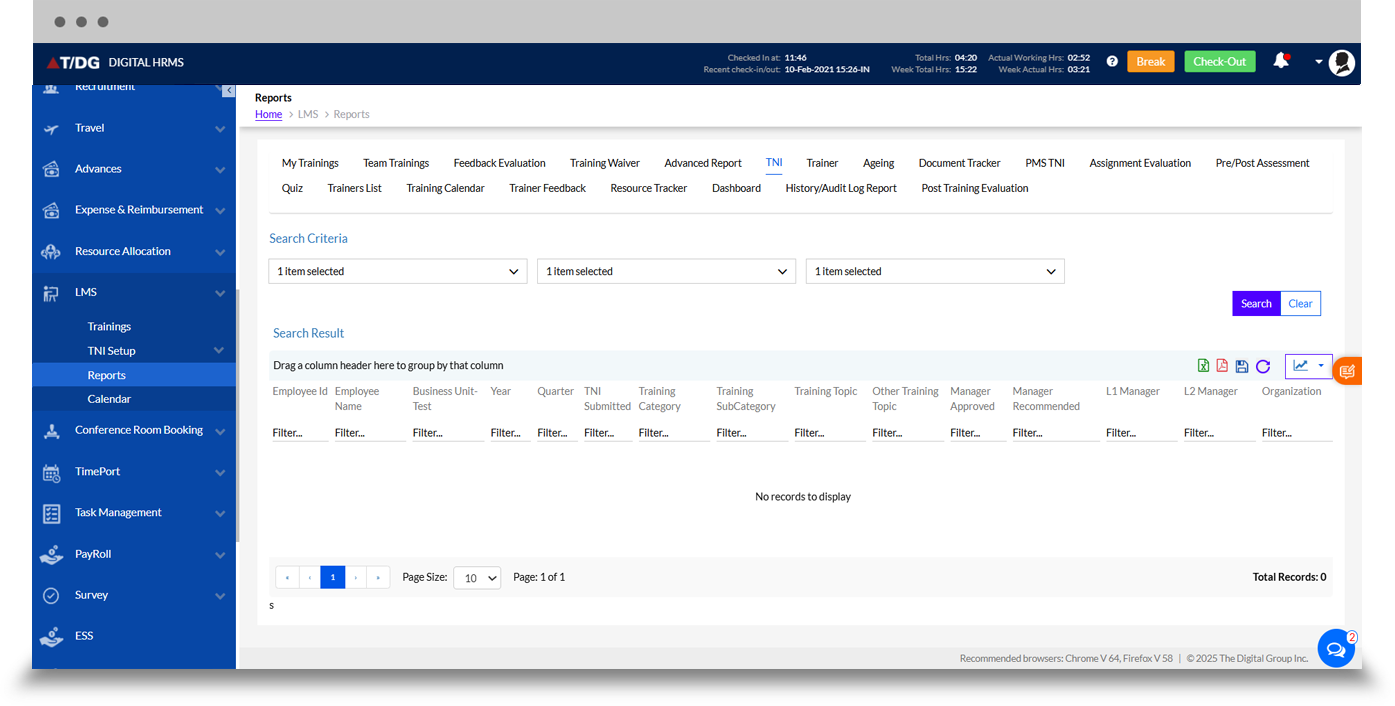
f. TNI
The TNI report provides visibility into training needs identified for employees. The report can include information such as employee, business unit, year, quarter, training category, training sub-category, training topic, submitted training requirements, and manager recommendations.
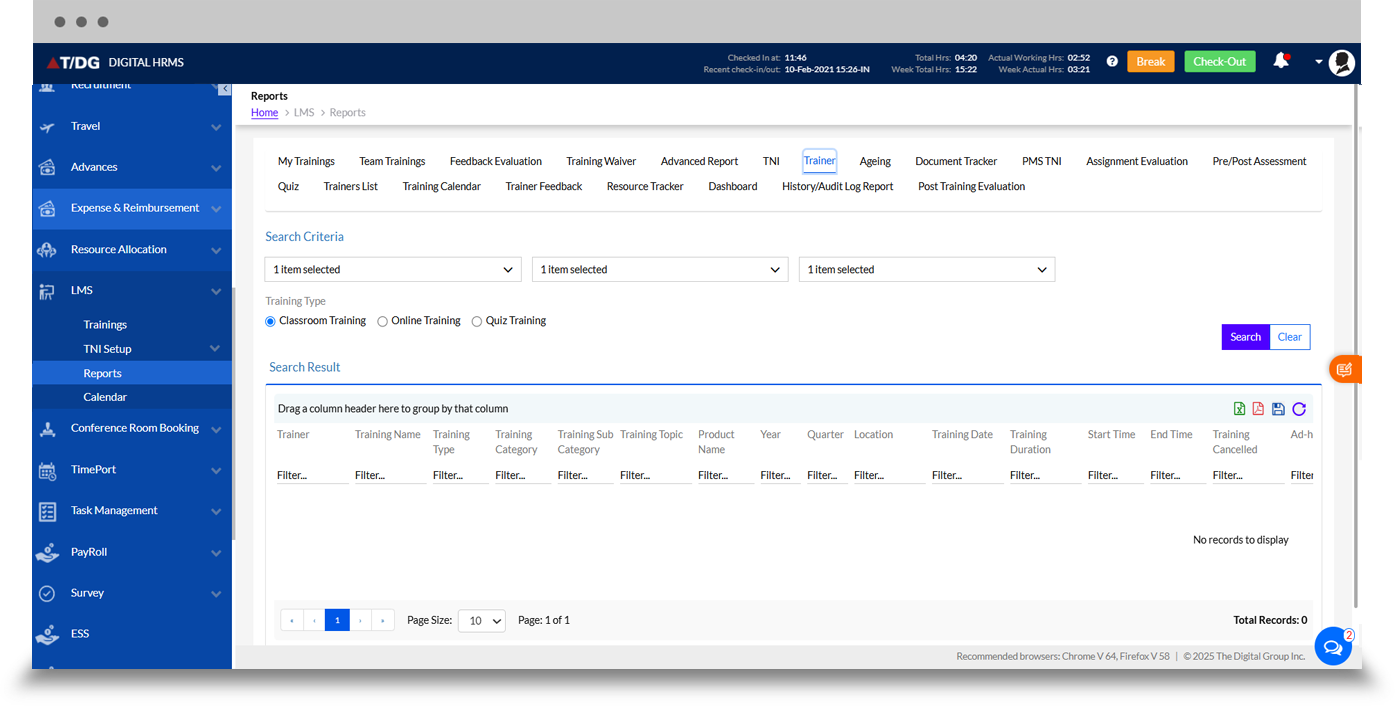
g. Trainer
The Trainer report provides information about training programs and associated trainers, allowing the Training team to analyze trainer allocation and training activities.
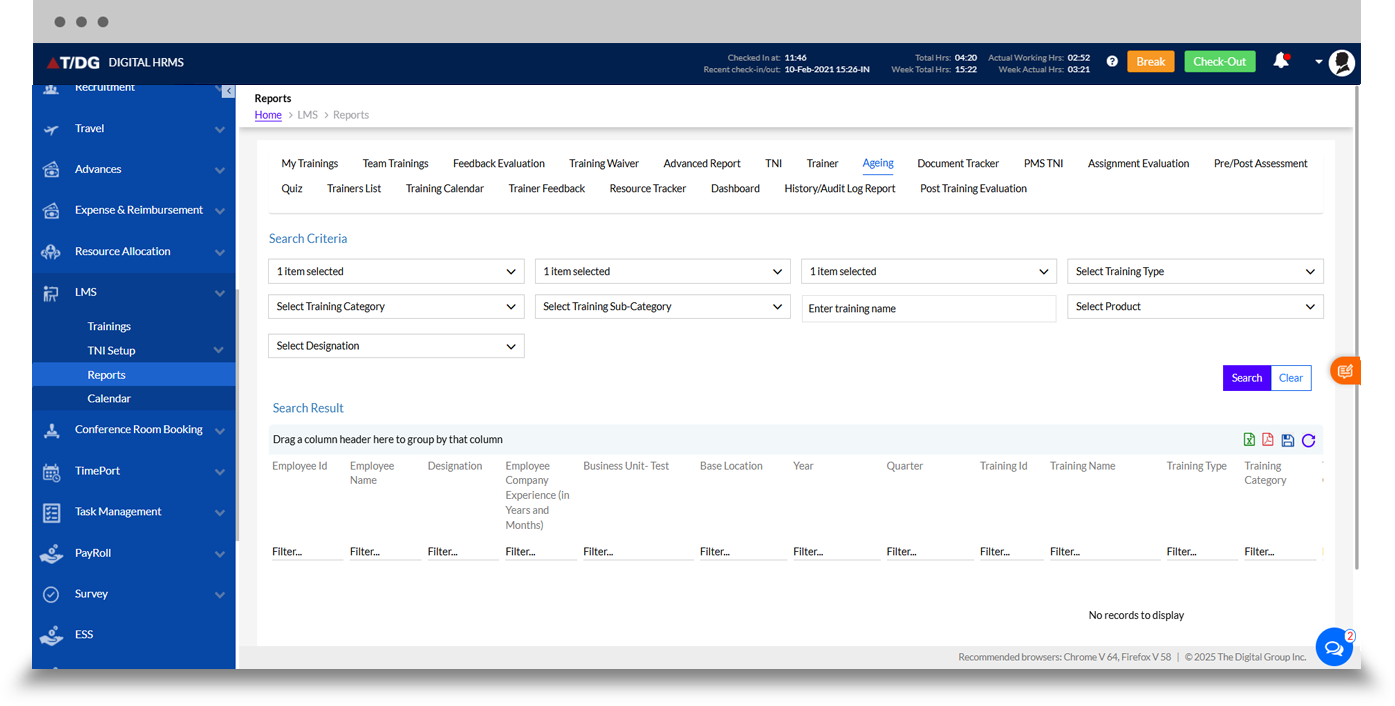
h. Ageing
The Ageing report provides visibility into training-related records based on ageing criteria, helping identify activities that have remained pending or open over a period of time.
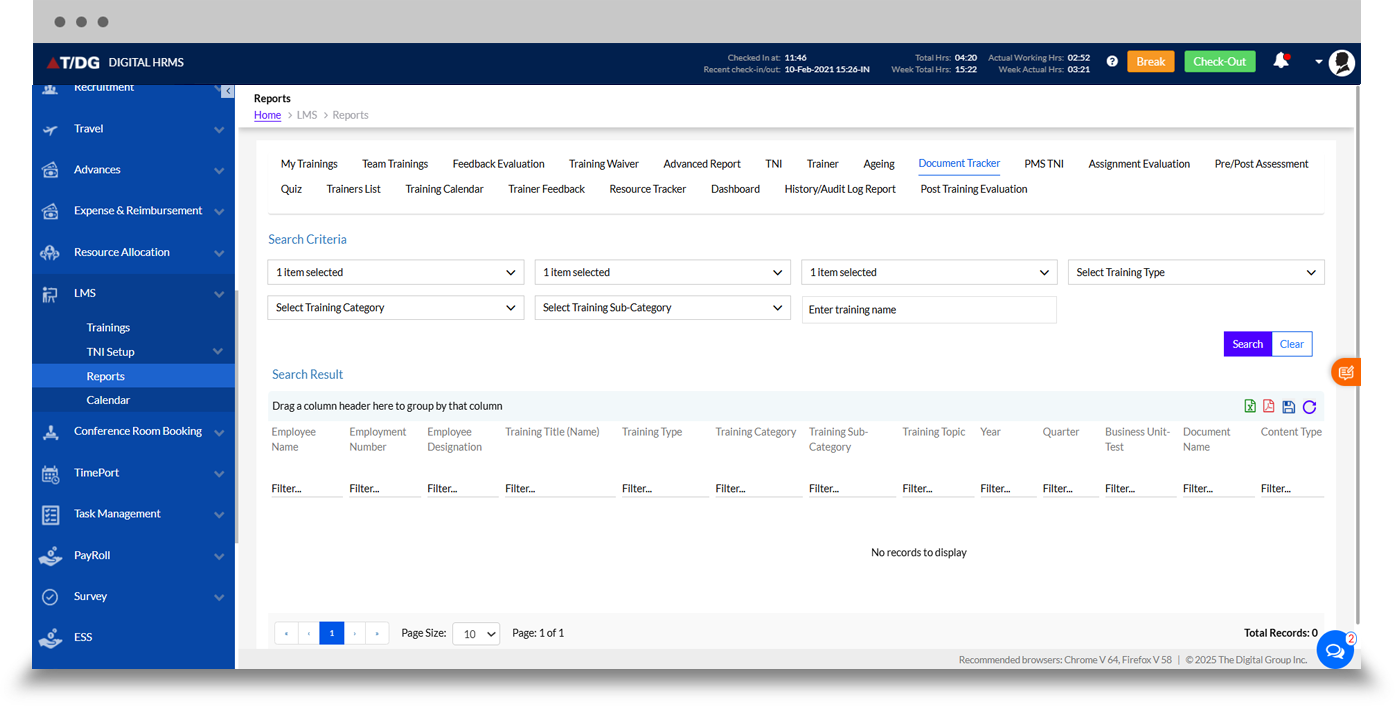
i. Document Tracker
The Document Tracker provides visibility into training-related documents associated with employees and training programs.
The report interface supports filtering by training title, training type, category, sub-category, training topic, year, quarter, business unit, document, and content type.
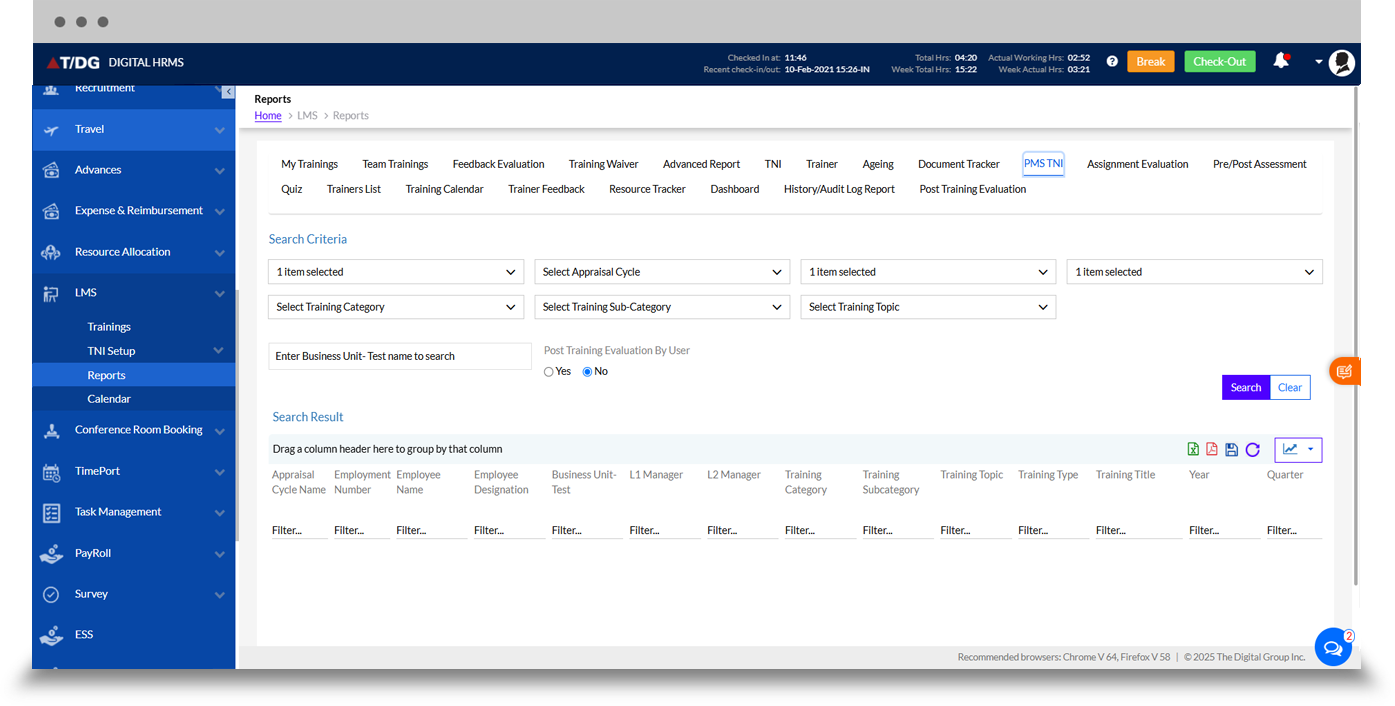
j. PMS TNI
The PMS TNI report allows the Training team to analyze training requirements originating from performance management processes, including appraisal cycles, employee details, managers, training categories, topics, and related recommendations.
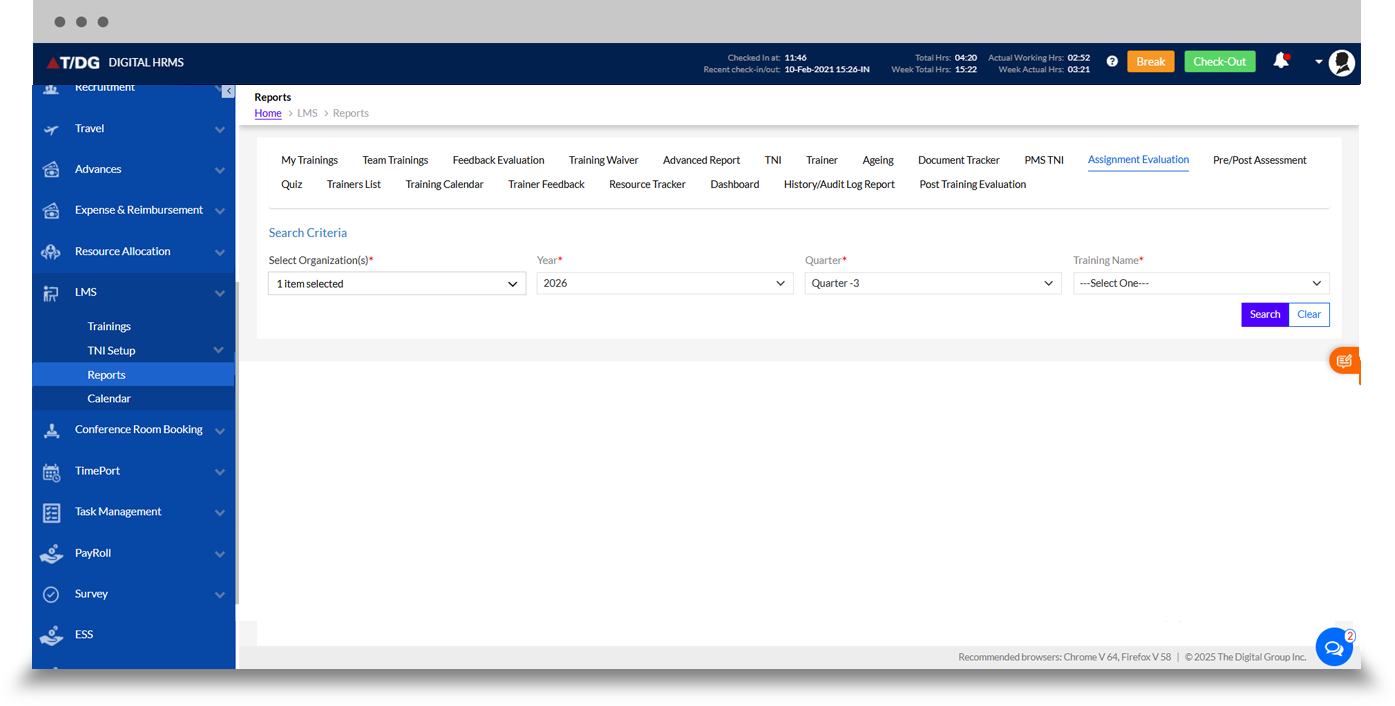
k. Assignment Evaluation
The Assignment Evaluation report provides visibility into training assignments and their evaluation-related information.
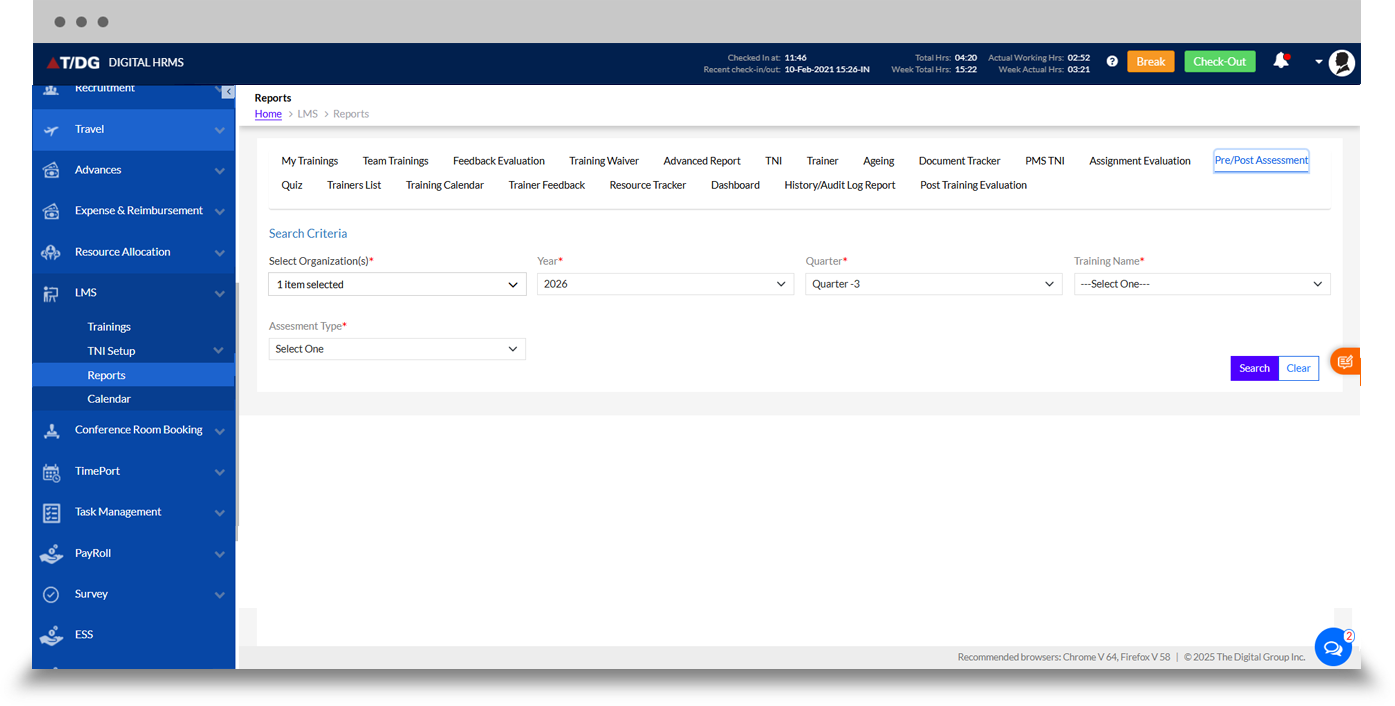
l. Pre/Post Assessment
The Pre/Post Assessment report supports analysis of assessments associated with training programs and allows the Training team to review assessment-related information for selected training periods.
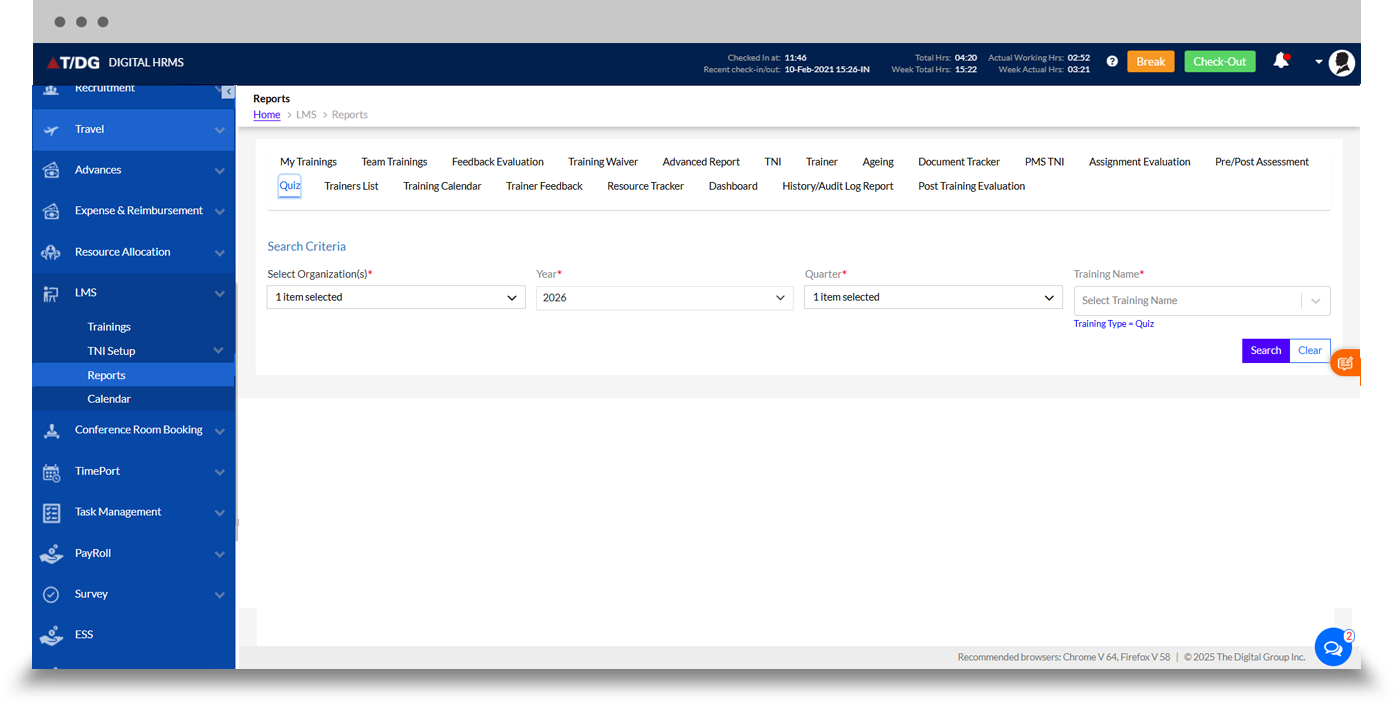
m. Quiz
The Quiz report provides visibility into training quiz information and allows the Training team to review quiz-related records using relevant training criteria.
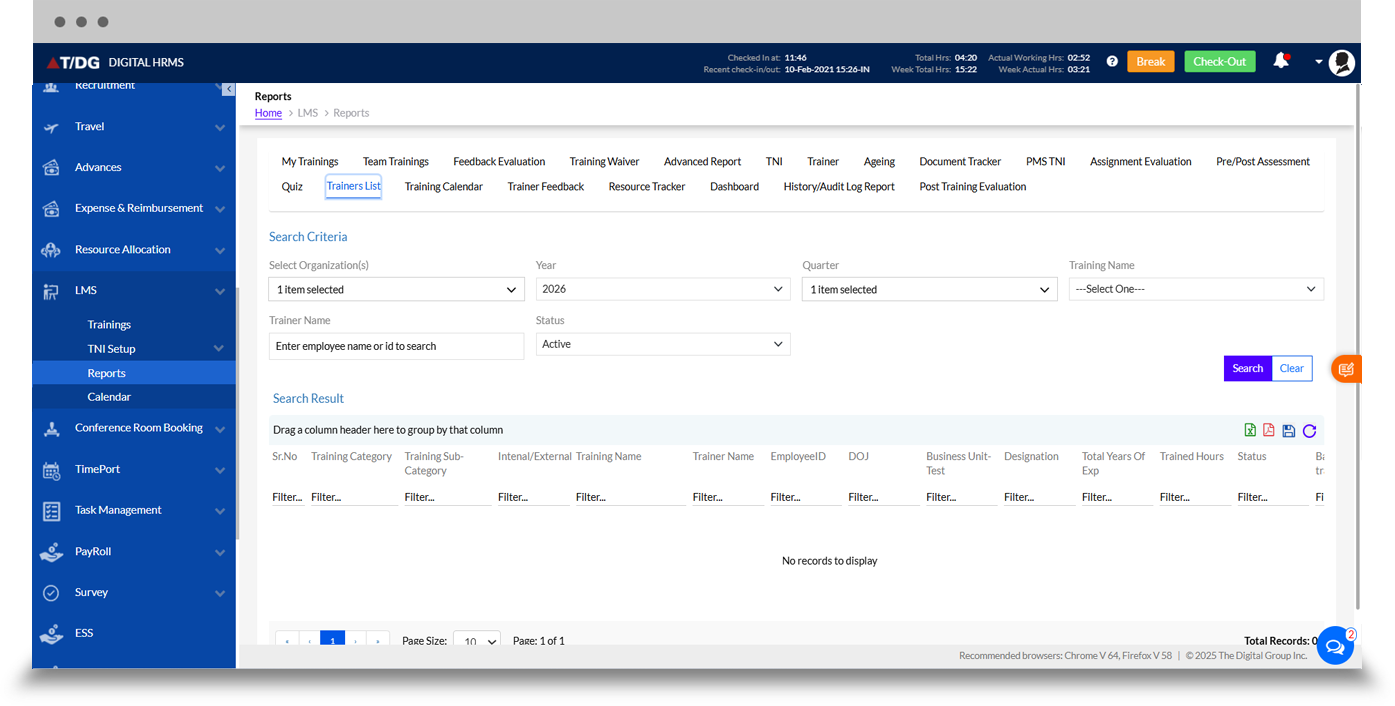
n. Trainers List
The Trainers List provides a consolidated view of trainer information, including employee-related and organizational details and experience information.
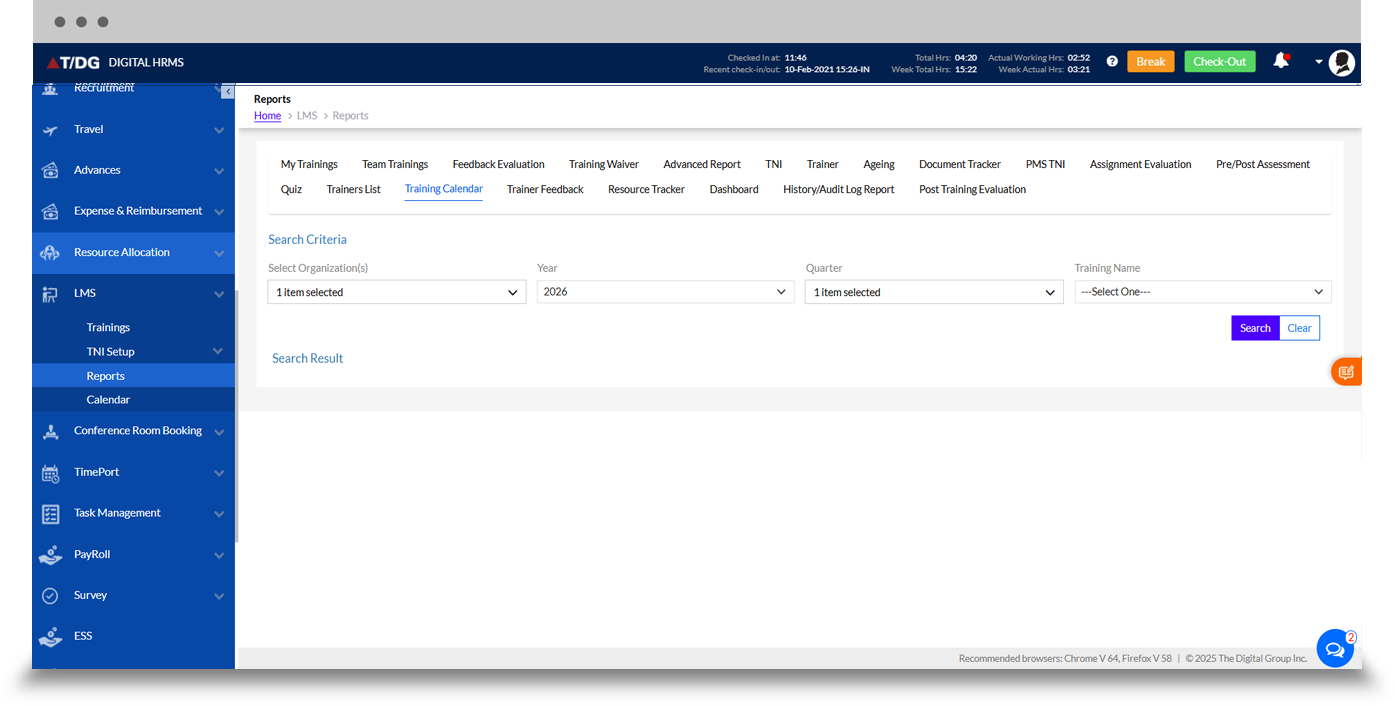
o. Training Calendar
The Training Calendar provides a calendar-oriented view of scheduled training activities, helping users identify when training programs are planned.
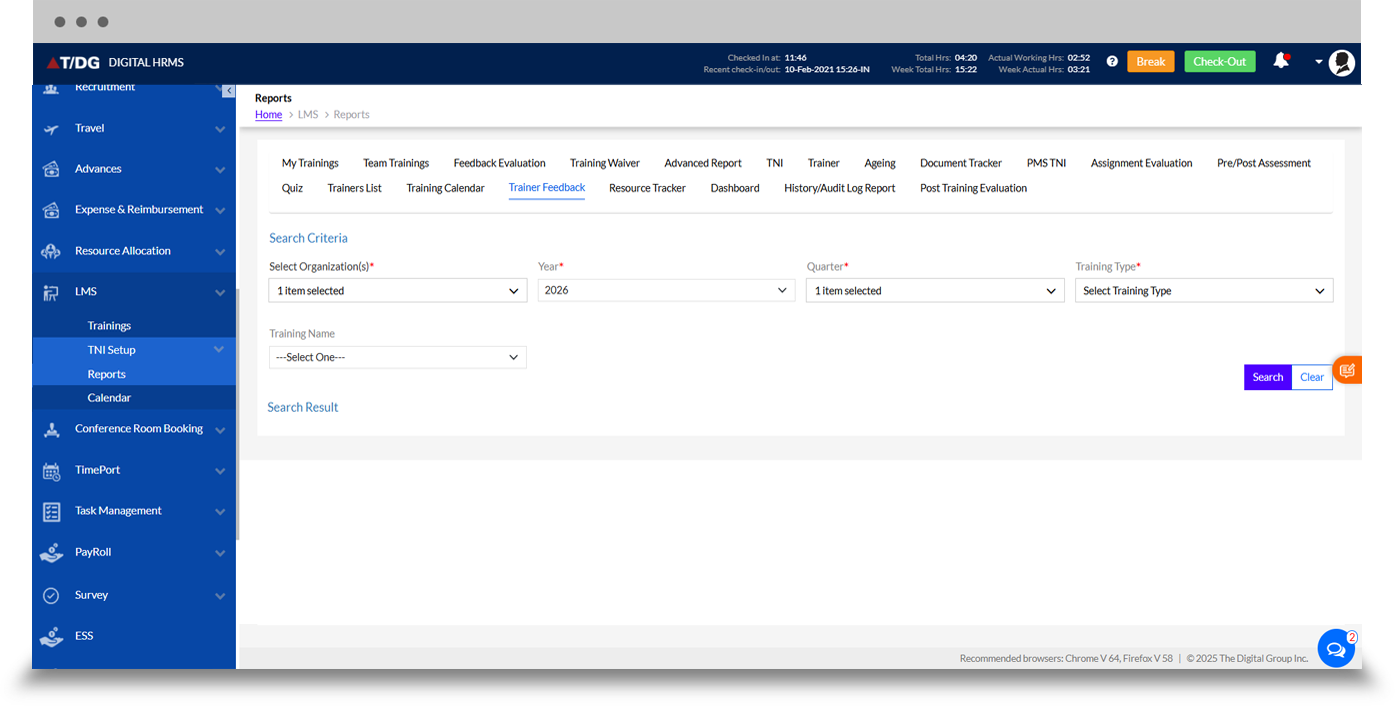
p. Trainer Feedback
The Trainer Feedback report provides visibility into feedback related to trainers and their associated training programs.
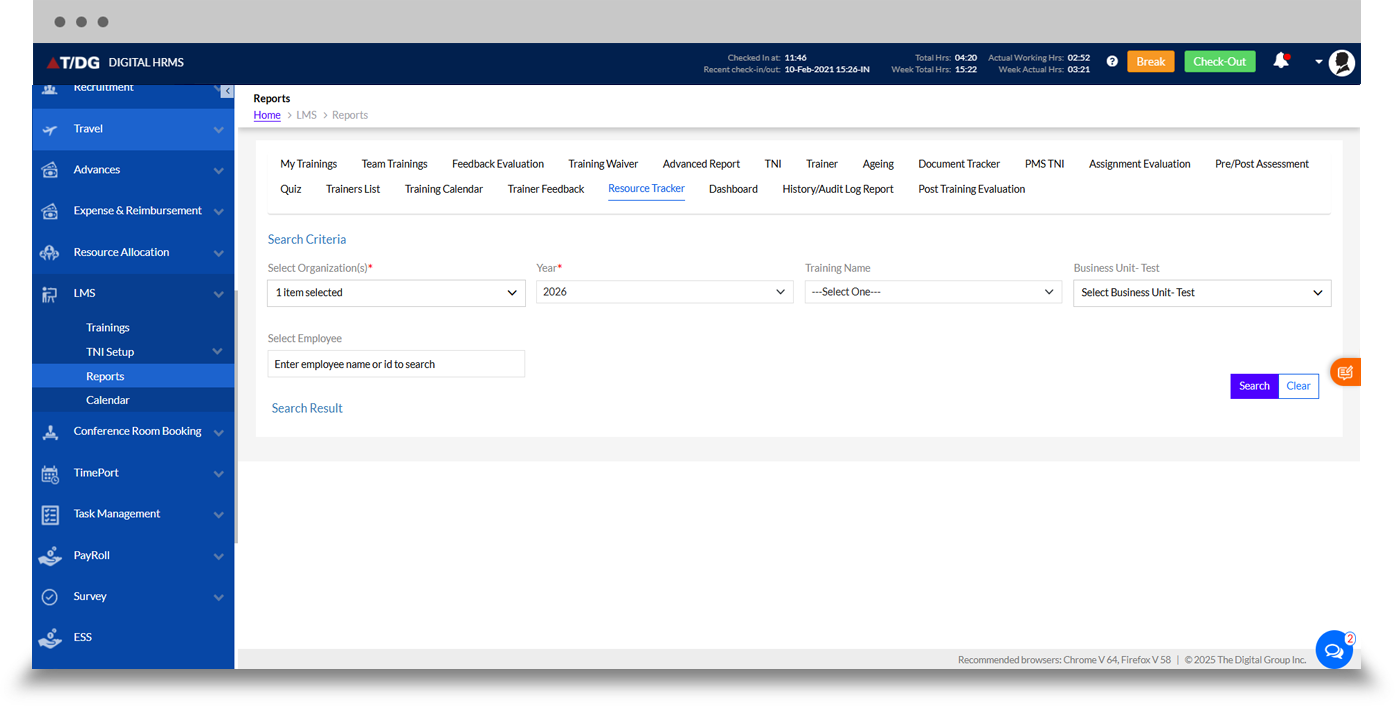
q. Resource Tracker
The Resource Tracker provides a report-based view of training resources and related training information.
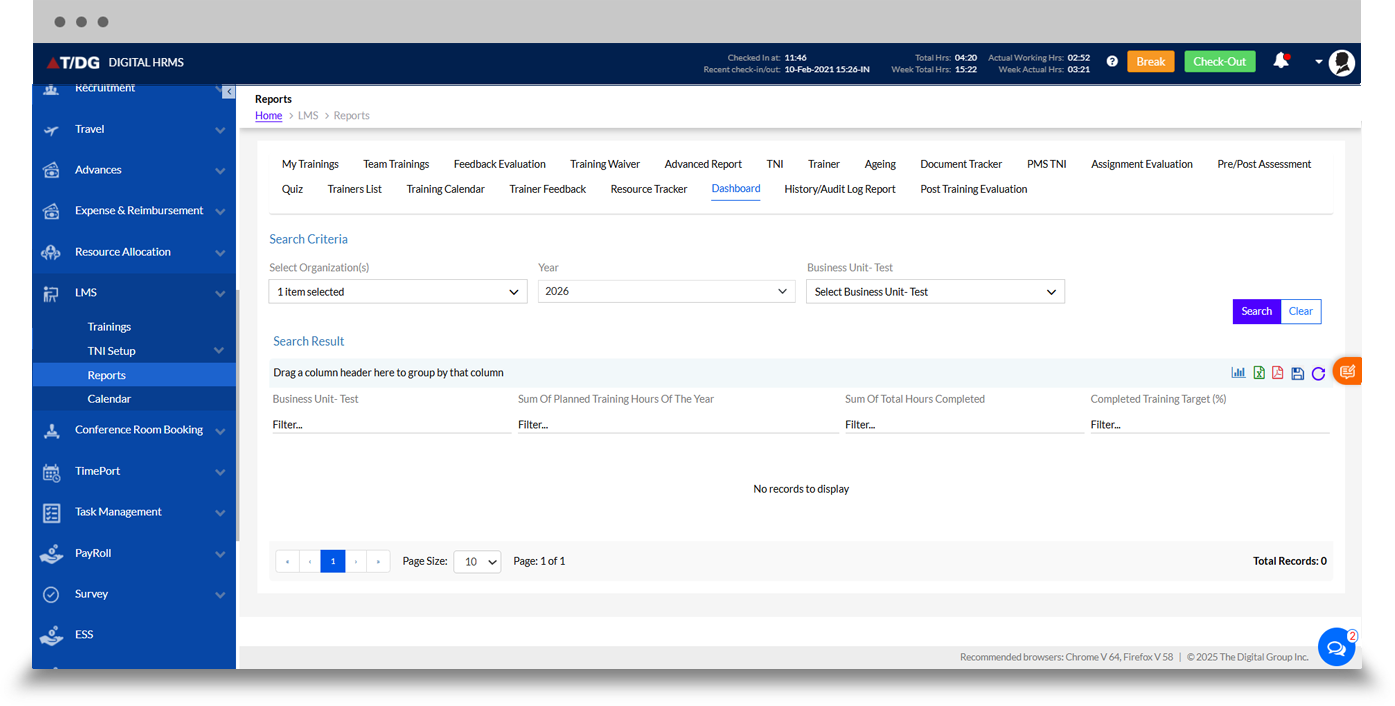
r. Dashboard
The Dashboard report provides a consolidated view of training-related metrics and information for analysis.
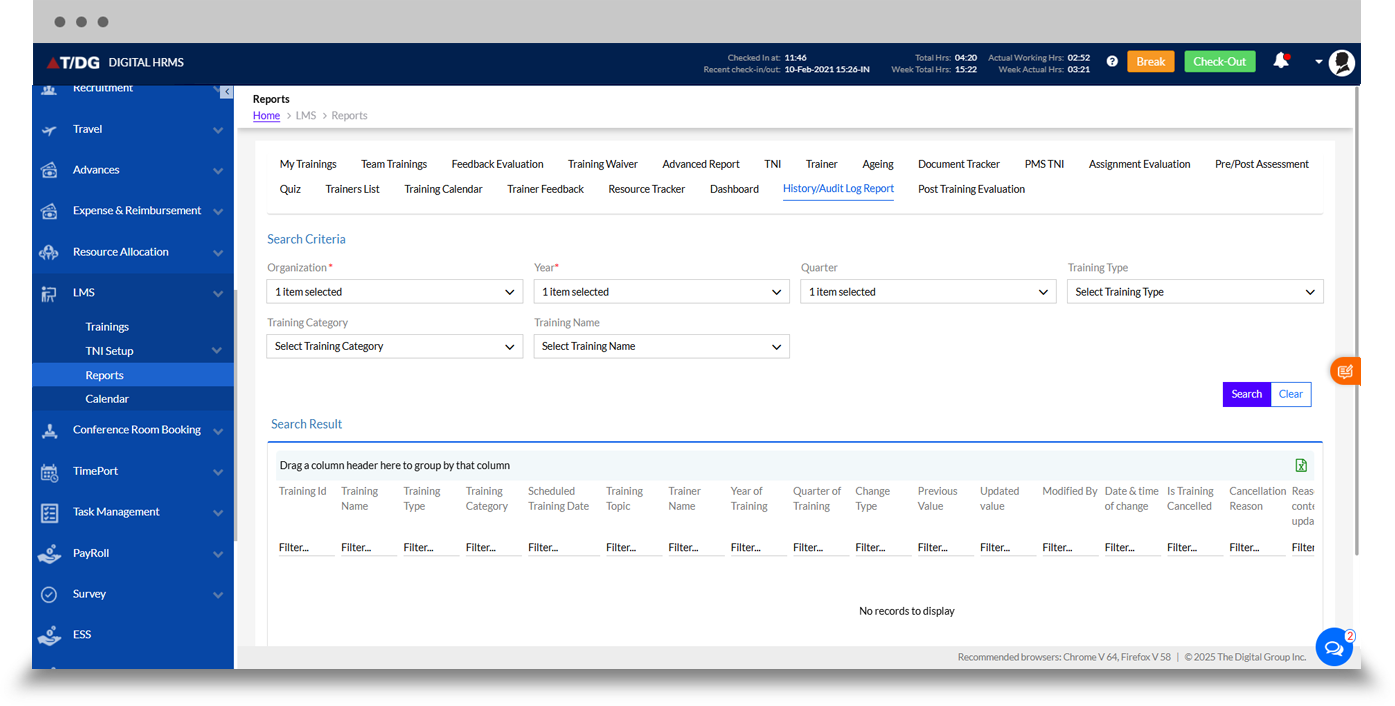
s. History/Audit Log Report
The History/Audit Log Report provides historical visibility into training-related activities and changes, supporting tracking and audit requirements.
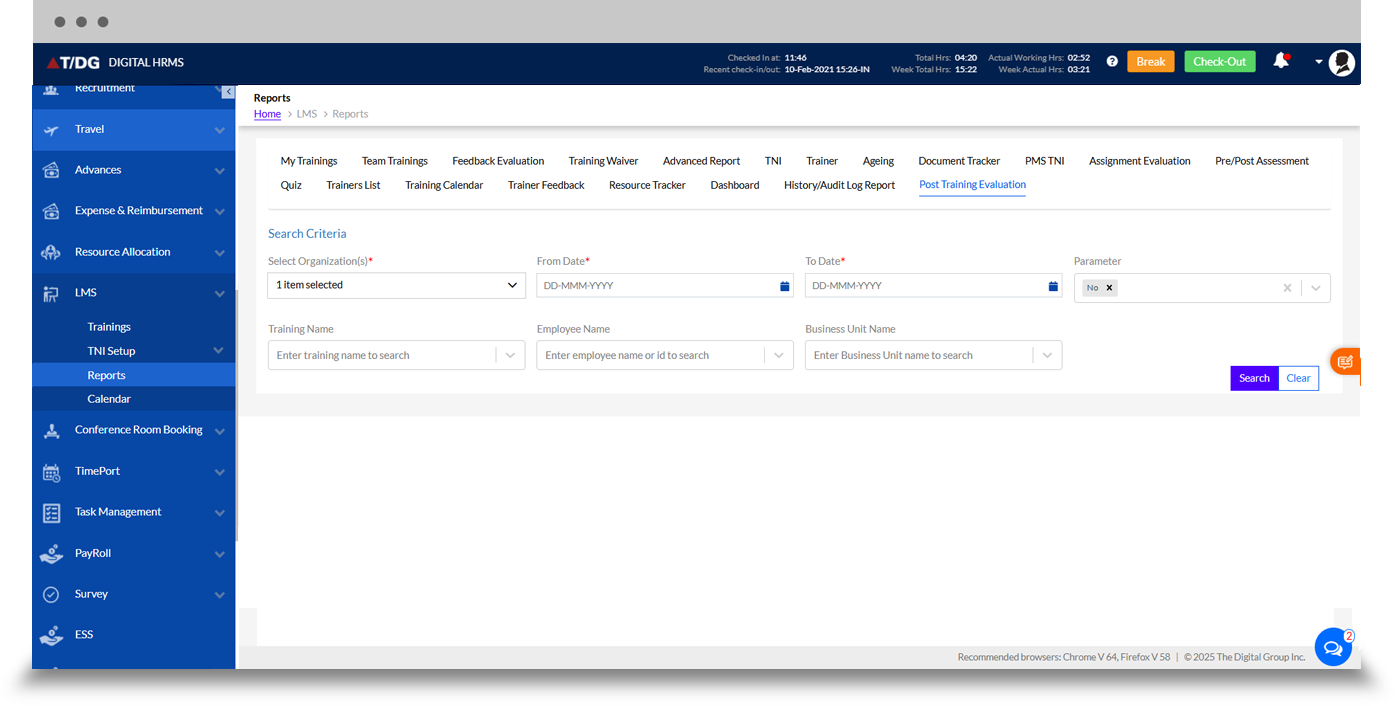
t. Post Training Evaluation
The Post Training Evaluation report helps the Training team analyze evaluations collected after training programs. The interface supports filtering using criteria such as organization, year, quarter, training name, and assessment-related parameters.
Plan and Monitor Training Schedules with the Training Calendar
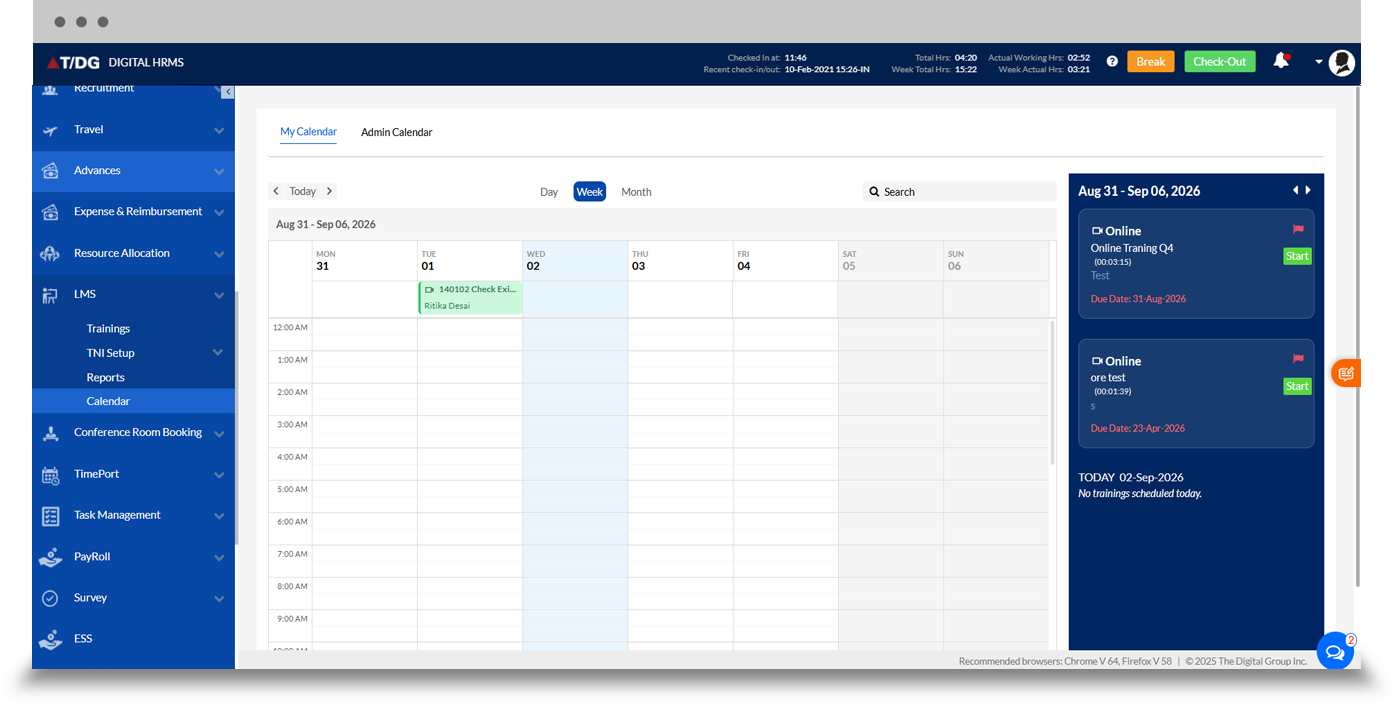
The Calendar provides a visual schedule of training activities across days and weeks.
The calendar view allows users to switch between Day and Month views, navigate between dates, and identify scheduled training sessions directly on the calendar.
The calendar can display information such as the training title, trainer, duration, and scheduled date/time, helping employees and training teams understand upcoming learning activities without having to navigate through individual training records.
The calendar also provides a quick view of whether trainings are scheduled for a particular day, making it easier to plan participation and manage training schedules.
Why Choose Digital HRMS for Employee Training Management?
One Platform for Multiple Training Activities
Manage employee training requirements, nominations, training schedules, TNI, goals, reports, external training, evaluations, and calendars from a single platform.
Support for Different Learning Formats
Manage online, classroom, and on-the-job training through a common corporate training LMS, helping organizations accommodate different learning requirements.
Better Employee and Manager Visibility
Employees can view their own training activities, while managers can access relevant team training information and nominations based on their role.
Structured Training Needs Management
Use TNI and goal-setting capabilities to identify training requirements and establish defined training goals for employees.
Detailed Training Analytics
Access a broad range of reports covering participation, training requirements, evaluations, trainers, assessments, documents, training hours, and other training information.
Flexible and Secure HRMS Platform
Digital HRMS can be deployed on Azure cloud, on-premise, and mobile platforms, while supporting role-based access and 256-bit SSL encryption for data security.

Learn More About Digital HRMS Training Management
Explore how Digital HRMS can help your organization manage employee training requirements, identify learning needs, support online and classroom training, track training activities, and generate detailed reports from a centralized platform.
Build a More Effective Employee Training Strategy
Give your HR and Training teams a centralized employee training management software platform to identify requirements, manage learning programs, monitor progress, and evaluate training outcomes.