Simplify Performance Assessment with Digital HRMS
Manage employee performance, goals, competencies, and assessments through a centralized platform.
How Performance Assessment Improves Employee Performance
Managing employee performance requires clear goals, regular assessments, meaningful feedback, and visibility into progress. Digital HRMS provides a structured performance assessment platform that helps organizations manage goals, competencies, KRAs, employee assessments, and appraisal activities through a centralized system.
From self-assessments and team evaluations to normalization and appraisal tracking, the platform supports a consistent performance management process across the organization.
Common Performance Management Challenges
Managing performance manually can make it difficult to maintain consistent evaluations, track goals, and complete appraisal activities on time.
Unclear Performance Goals
Employees may lack visibility into their goals, KRAs, and expected outcomes.
Manual Assessments
Managing employee evaluations through disconnected processes can increase administrative effort.
Limited Performance Visibility
Managers may find it difficult to monitor employee progress throughout the assessment cycle.
Inconsistent Evaluations
Different assessment approaches can make performance comparisons challenging.
Delayed Appraisals
Tracking appraisal timelines manually can result in missed or delayed assessments.
Limited Performance Insights
Without centralized information, HR teams may struggle to identify performance trends and development needs.
How Digital HRMS Simplifies Performance Management
Digital HRMS brings goal setting, competency management, employee assessments, appraisal tracking, and performance insights together through a centralized platform. Employees can manage their goals and complete self-assessments, while managers can set team goals and evaluate employee performance.
Dedicated dashboards for assessment status, normalization, appraisal due dates, and the 9-Box Grid provide HR teams and managers with greater visibility throughout the performance cycle.
Goal Management
Set and manage individual and team goals through structured workflows.
Employee Self Assessment
Enable employees to review and assess their own performance.
Team Assessments
Allow managers to evaluate employee performance and provide assessment inputs.
KRA & Competency Tracking
Manage competencies, KRAs, and goals from a centralized interface.
Performance Cycle Visibility
Monitor assessment status and upcoming appraisal activities.
Performance Insights
Use normalization and 9-Box Grid views to support informed performance decisions.
Key Features of Performance Assessment
Manage employee performance, goals, competencies, assessments, and appraisal activities through configurable tools designed to support effective performance management.
Performance Assessment Module Overview
Access dedicated dashboards to manage performance, goals, competencies, employee assessments, appraisal activities, normalization, and performance insights.
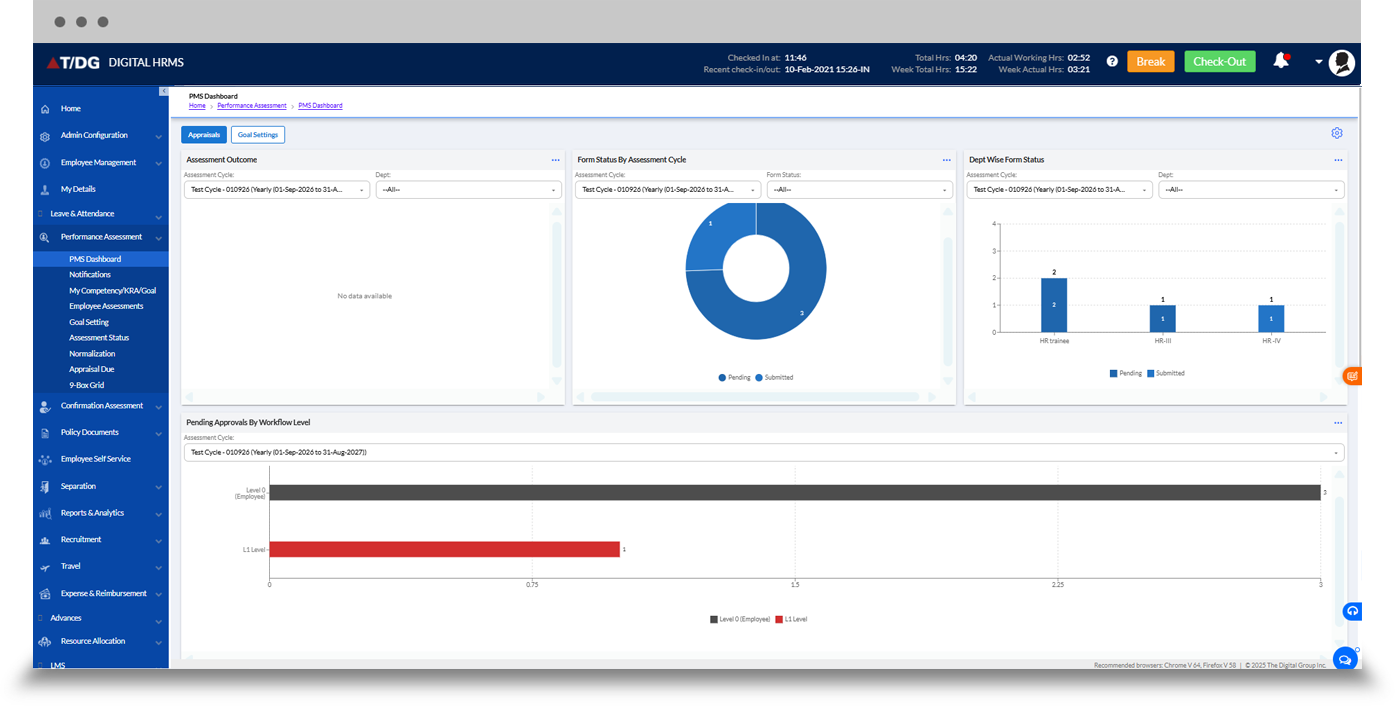
The PMS Dashboard provides a centralized view of performance management activities, helping users monitor key information throughout the performance cycle.
PMS Dashboard
The first PMS dashboard provides visibility into key performance-related activities and information, helping users monitor employee performance and assessment progress from a centralized interface.
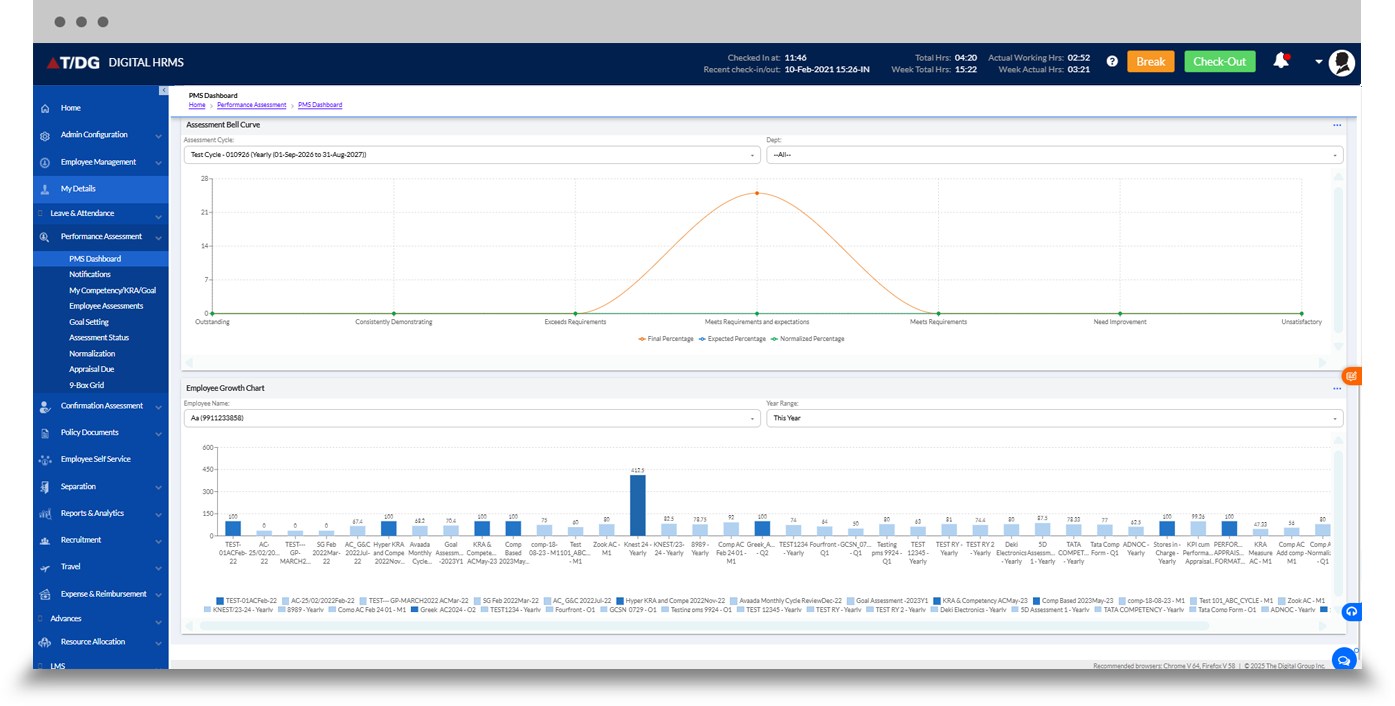
The Performance Dashboard provides another view of performance-related information, supporting better visibility into employee performance and ongoing performance management activities.
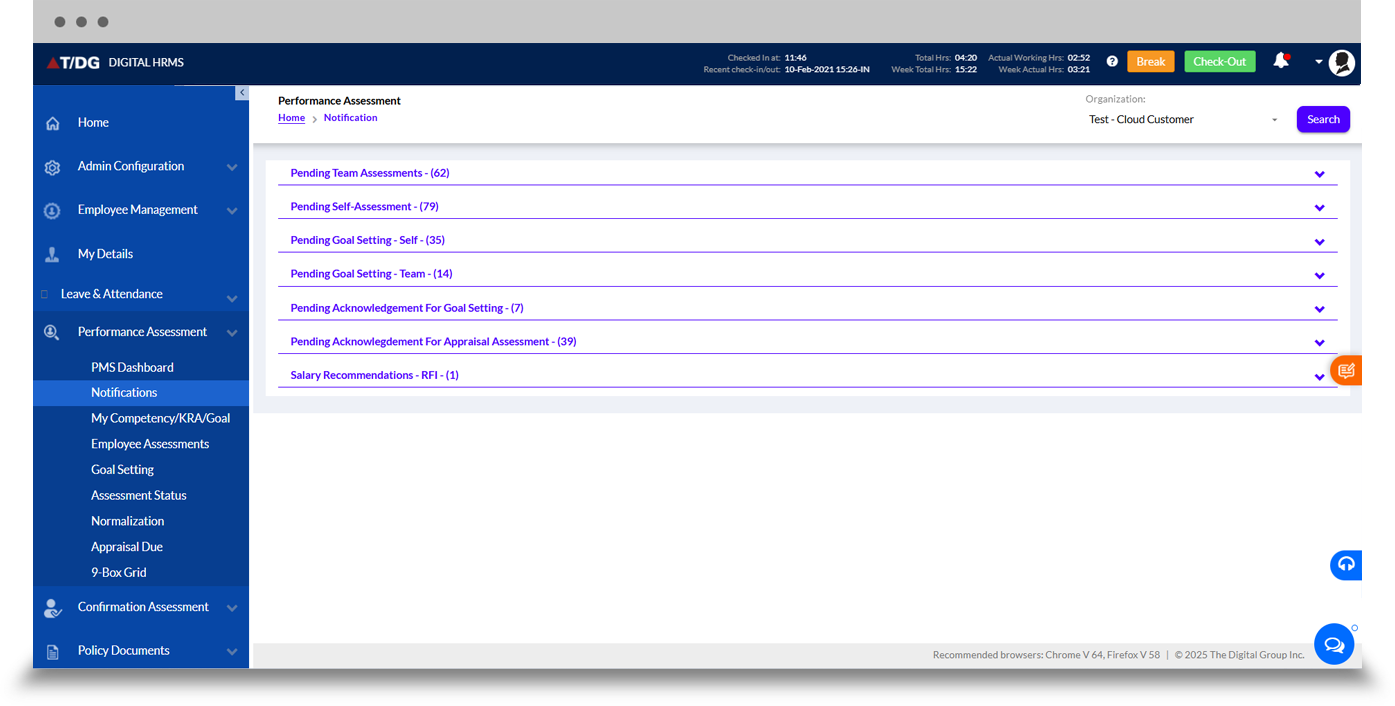
The Notifications dashboard provides visibility into performance-related notifications and activities requiring attention.
It helps employees, managers, and HR teams stay informed about relevant assessment, goal, and appraisal activities throughout the performance cycle.
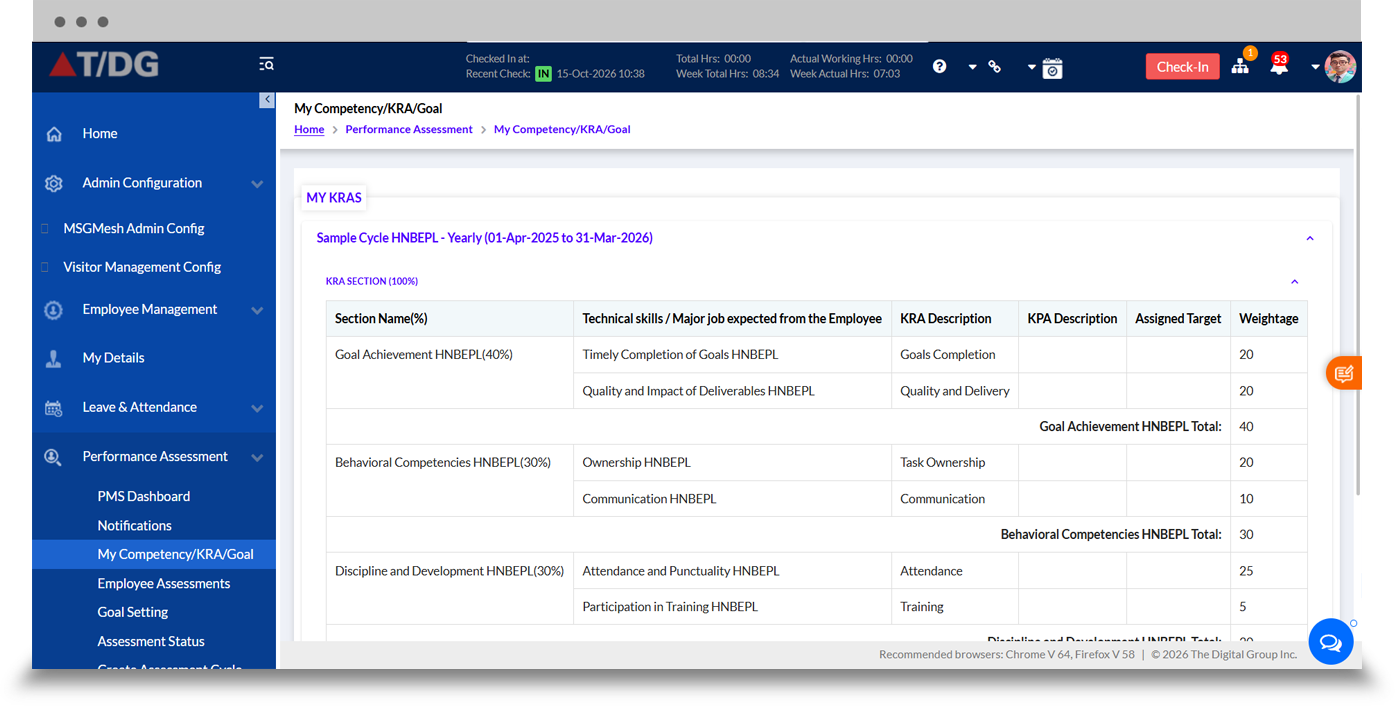
The My Competency/KRA/Goal dashboard provides employees with a centralized view of their assigned competencies, KRAs, and goals.
It helps employees understand their performance expectations and monitor the areas against which their performance is assessed.
The Employee Assessments section supports both employee-led and manager-led performance evaluations.
a. Self Assessments
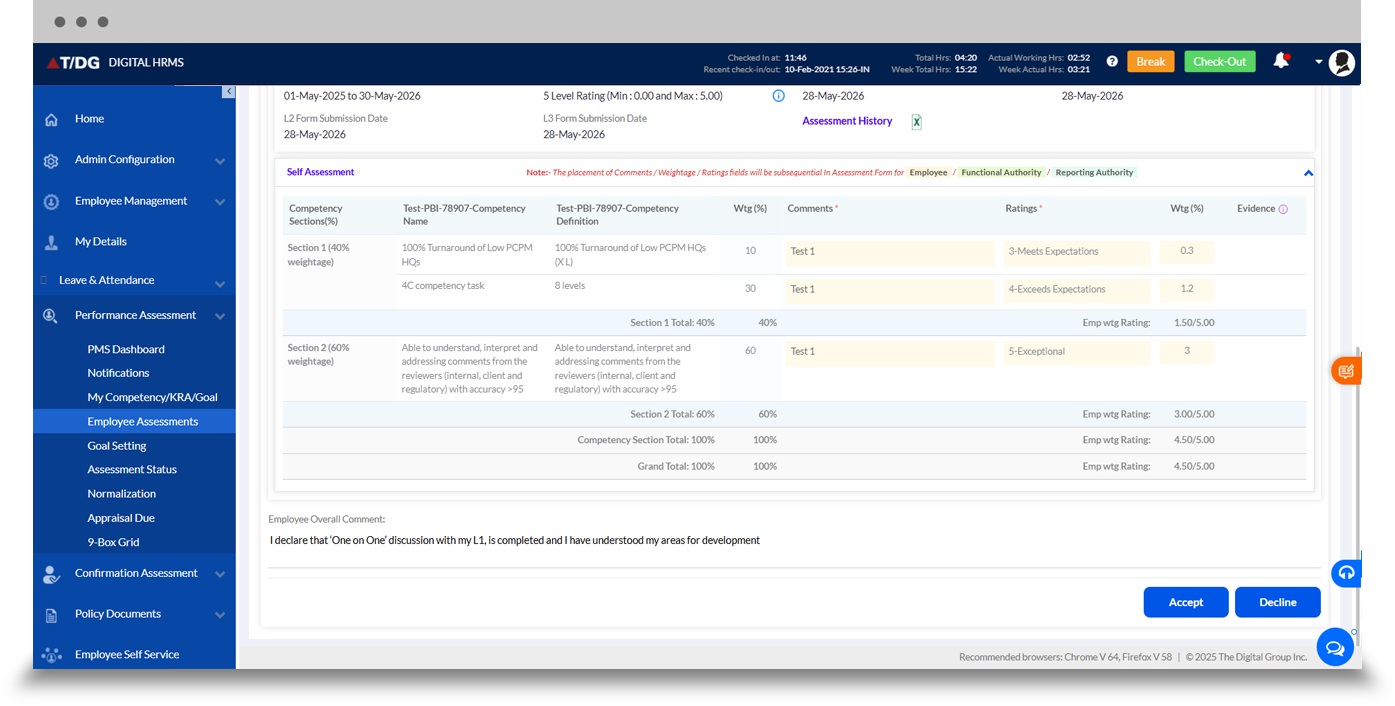
The Self Assessments dashboard enables employees to participate in their performance evaluation by providing their assessment inputs. It gives employees an opportunity to review their performance against defined expectations and contribute to the overall assessment process.
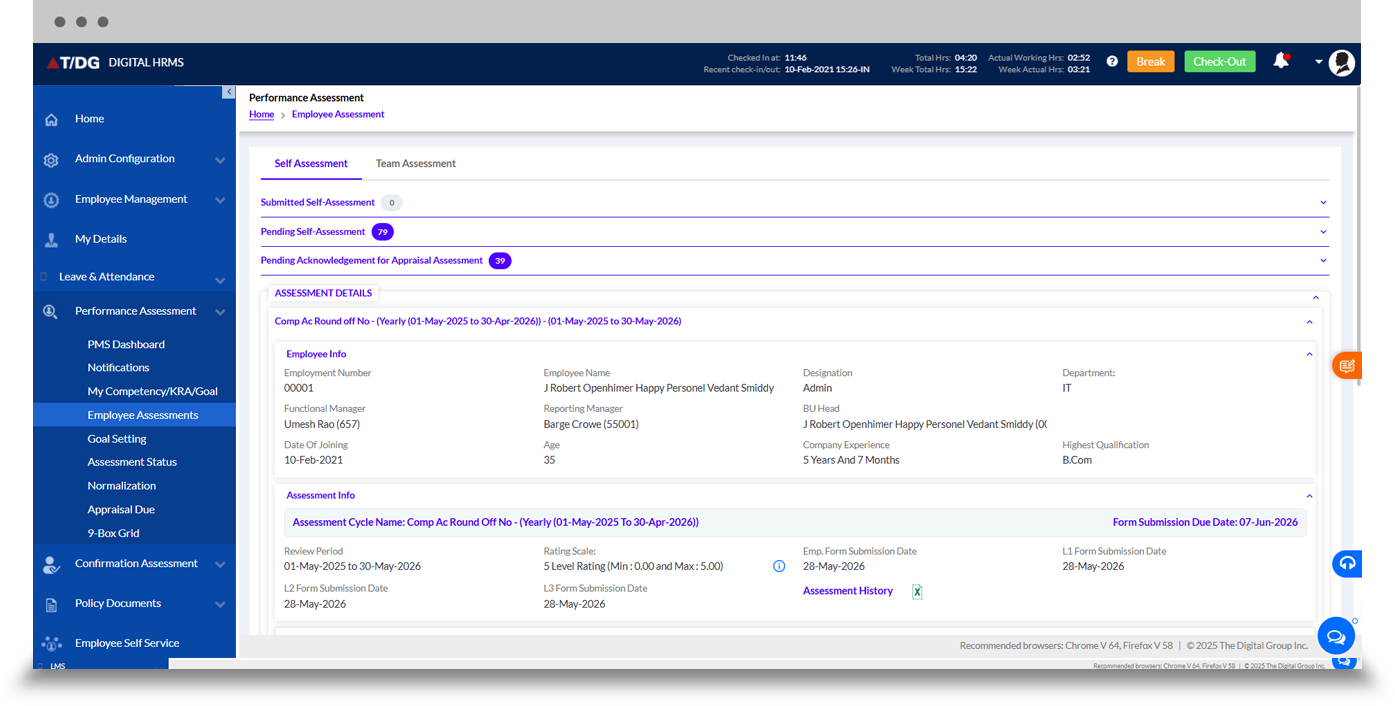
It also provides additional visibility into the employee's assessment activities and related performance information, supporting a structured self-review process.
b. Team Assessments
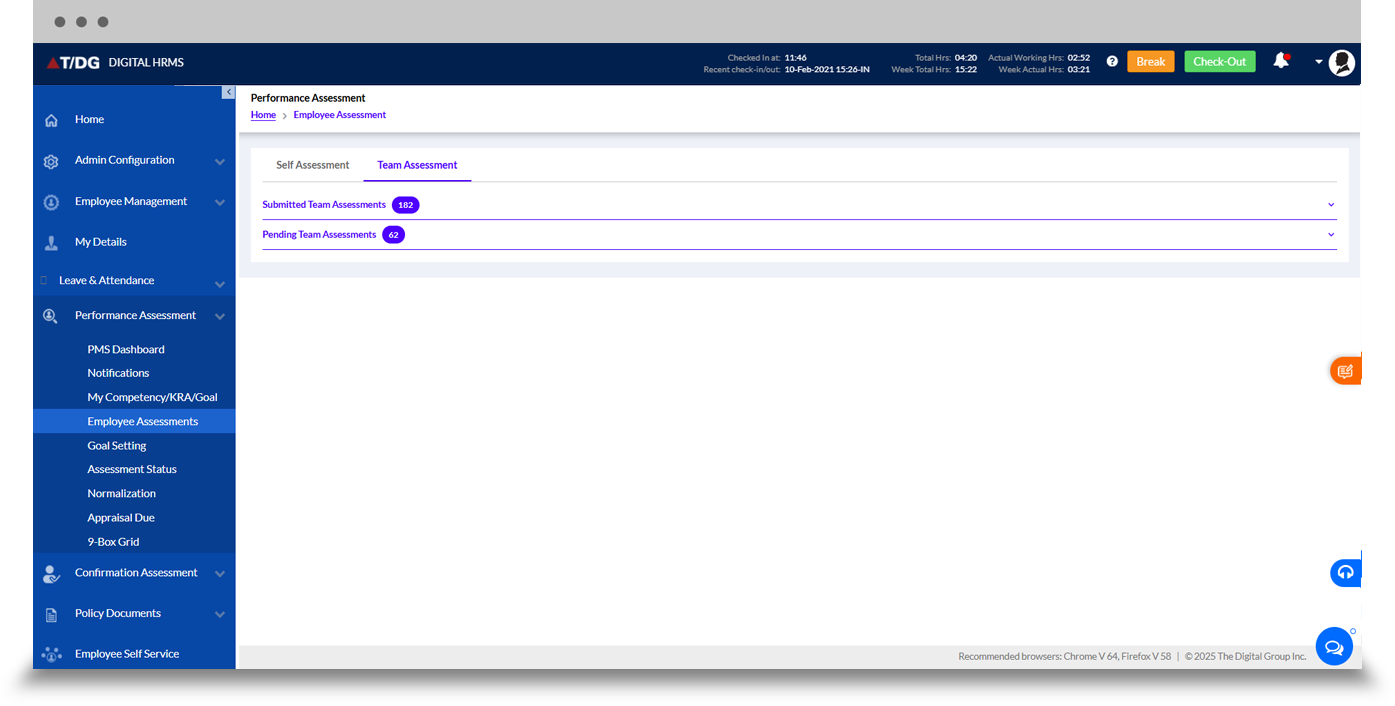
The Team Assessments dashboard enables managers to evaluate the performance of their team members. Managers can provide assessment inputs based on employee performance, goals, competencies, and KRAs, supporting a structured evaluation process.
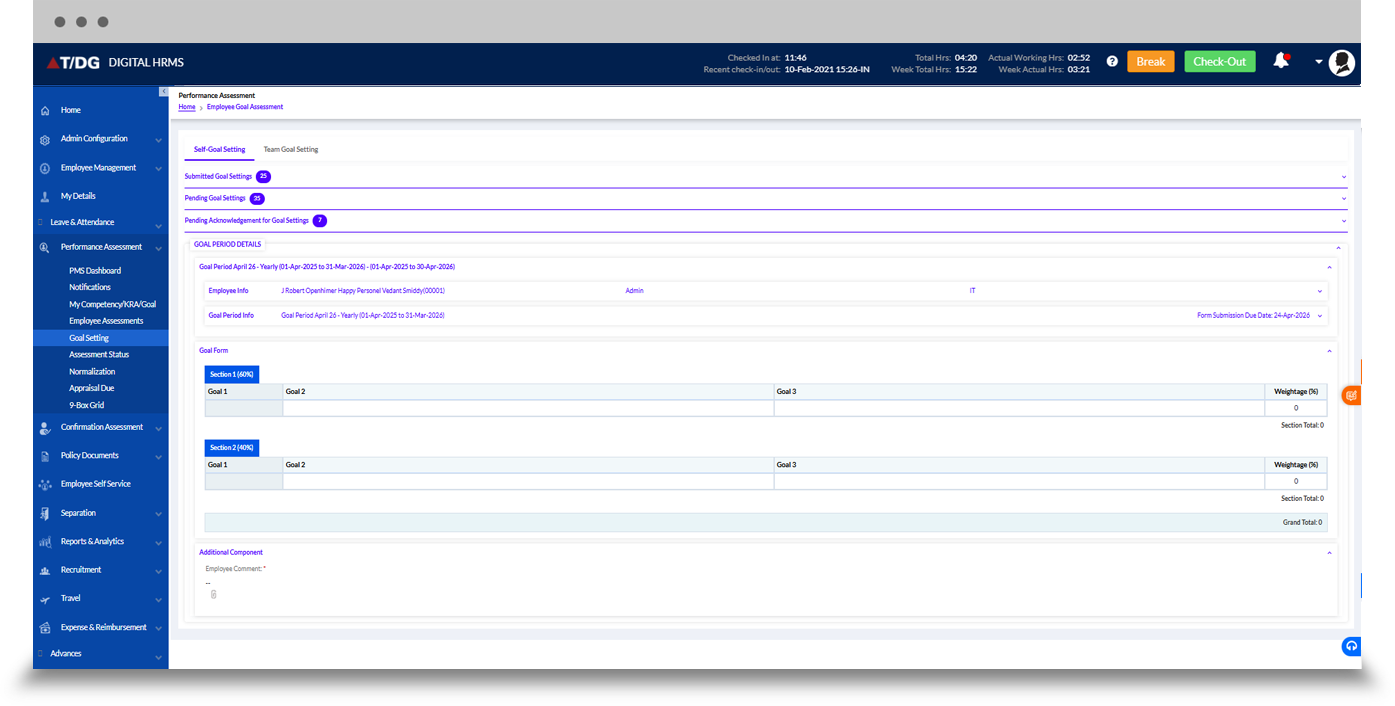
The Goal Settings section allows employees and managers to establish performance goals based on their respective responsibilities.
a. Self Goal Setting
The Self Goal Setting dashboard enables employees to define and manage their individual performance goals. This helps employees establish clear objectives and maintain visibility into the goals that contribute to their overall performance.
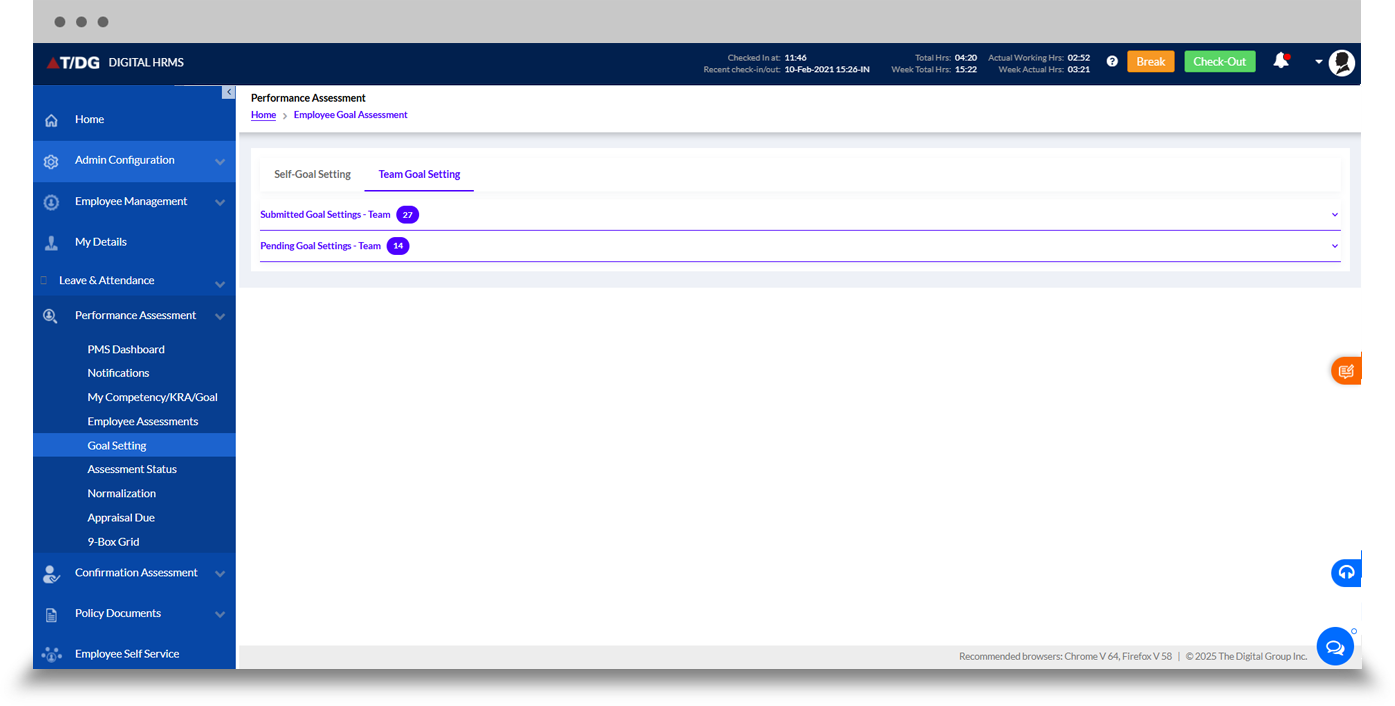
b. Team Goal Setting
The Team Goal Setting dashboard enables managers to set and manage goals for their team members. It helps align individual employee goals with team responsibilities and broader organizational objectives.
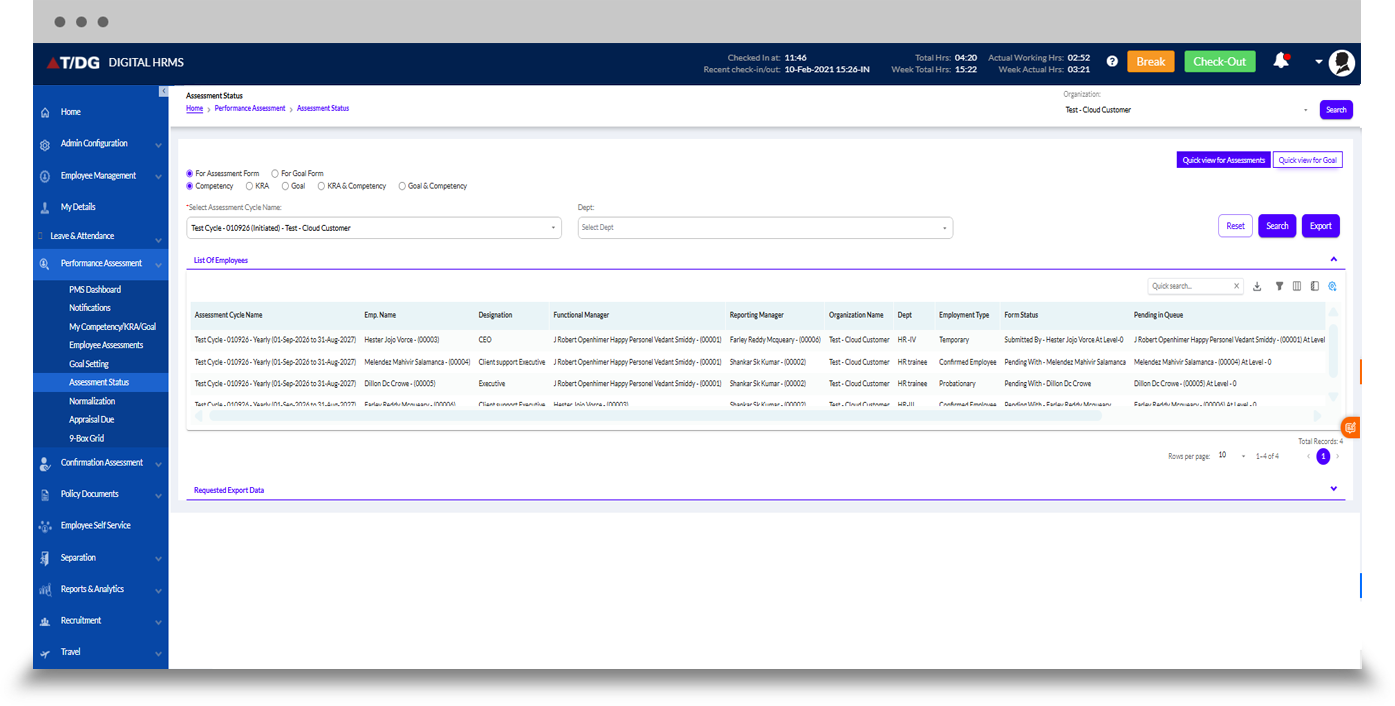
The Assessment Status dashboard provides visibility into the current status of employee performance assessments.
It helps HR teams and managers monitor assessment progress and identify activities that are pending or require attention.
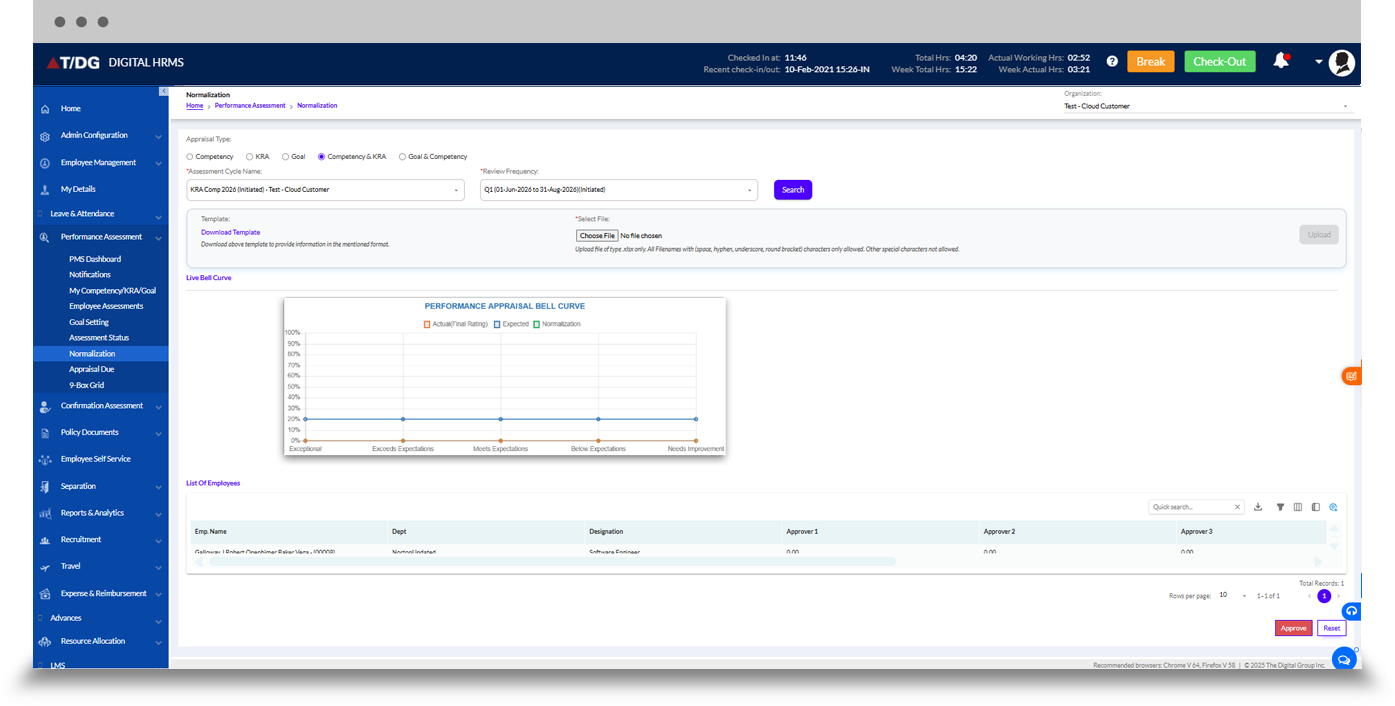
The Normalization dashboard supports the review and normalization of employee performance assessment outcomes.
It provides HR and management teams with an additional view for evaluating performance results and supporting greater consistency across assessments.
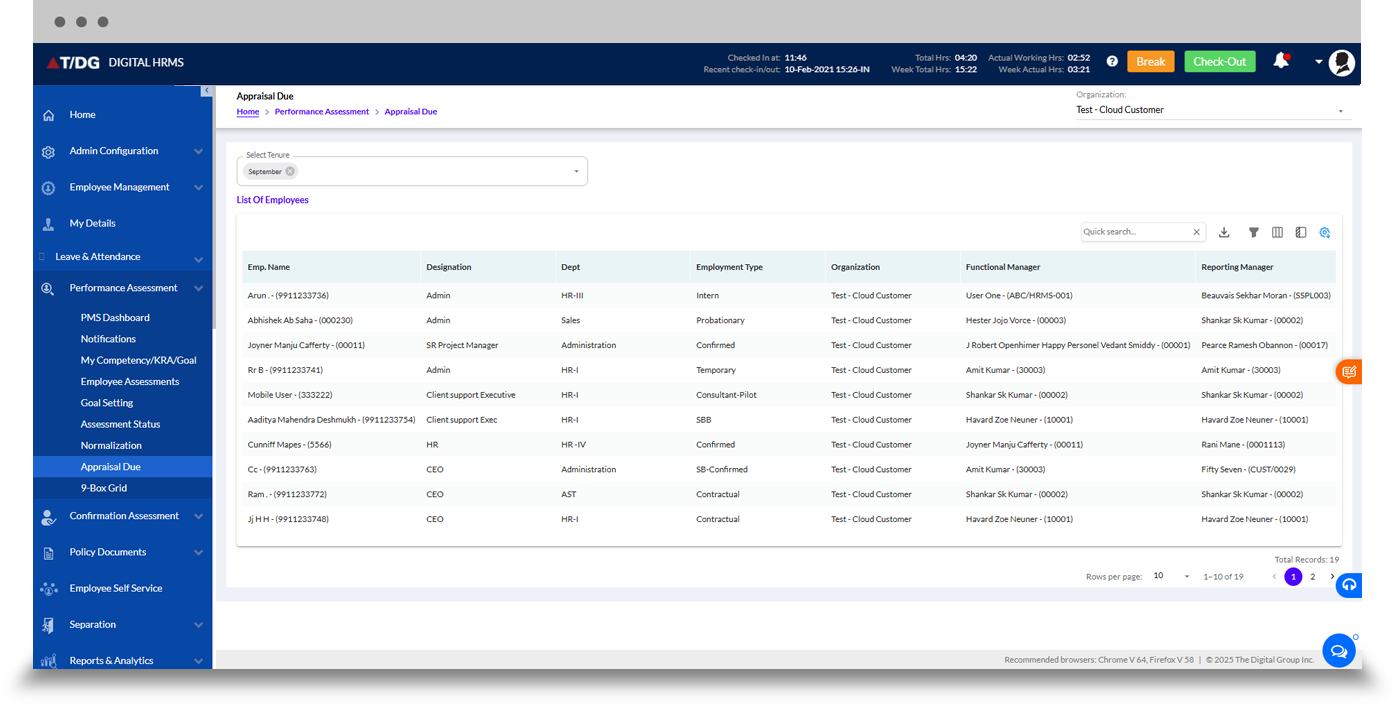
The Appraisal Due dashboard helps HR teams identify employees with upcoming appraisal activities.
This makes it easier to monitor appraisal timelines and take timely action to complete the required performance management activities.
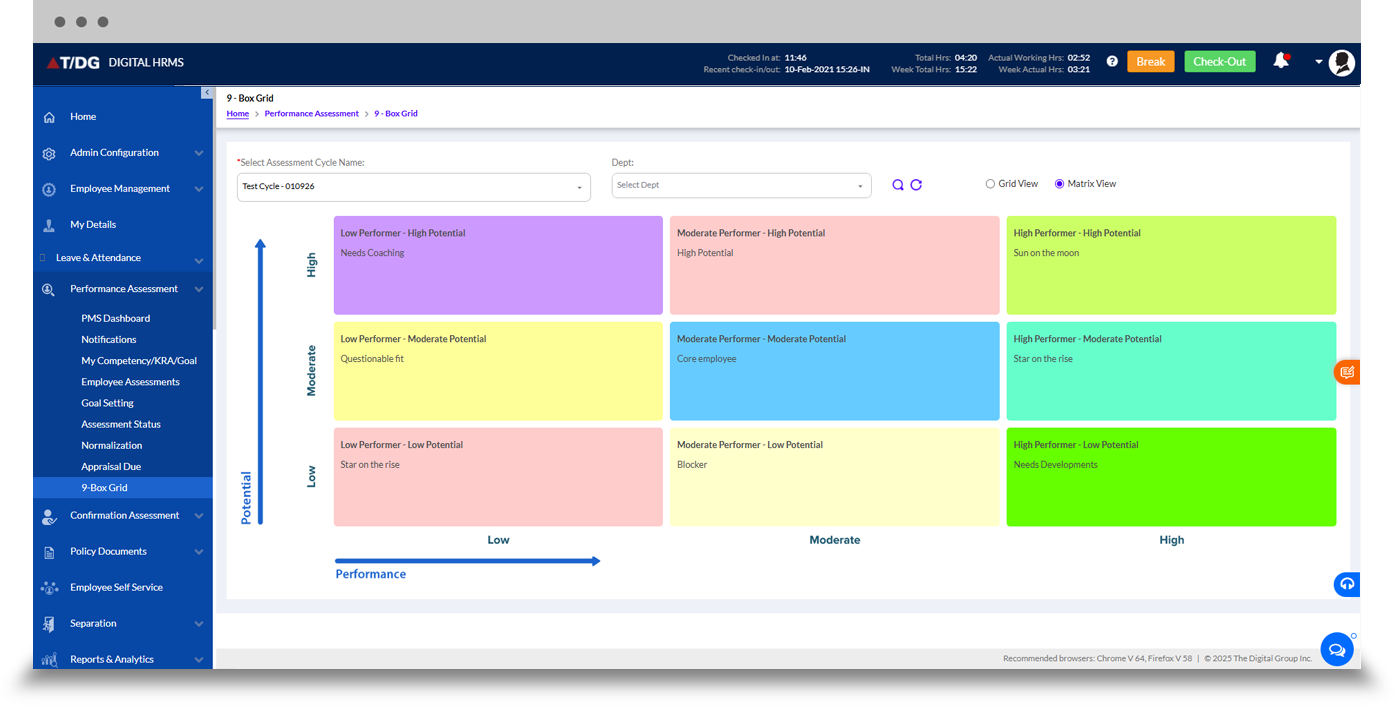
The 9-Box Grid dashboard provides a structured view for evaluating employee performance and potential.
It can help HR and managers gain a broader perspective of employee positioning and support performance discussions and workforce development decisions.
Why Choose Digital HRMS for Performance Management?
Structured Performance Assessment
Manage employee evaluations through a consistent performance process.
Employee & Manager Participation
Support both self-assessments and team assessments.
Clear Goal Management
Set, manage, and monitor individual and team goals.
Centralized Performance Visibility
Access performance information and assessment status from one platform.
Data-Driven Performance Insights
Use normalization and the 9-Box Grid to support informed decisions.
Timely Appraisal Management
Track upcoming appraisal activities and due dates.
Learn More About Performance Assessment
Download the detailed module presentation to explore the Performance Assessment module's dashboards, goal-setting capabilities, employee assessments, appraisal tracking, normalization, and performance management features.
Strengthen Performance Management with Digital HRMS
Managing employee performance shouldn't depend on disconnected assessments and manual follow-ups. Digital HRMS brings performance assessment, goal setting, employee reviews, appraisal tracking, and performance insights together through a centralized HR software platform.